
Why Basement Water Problems Should Not Be Ignored
A wet basement is more than an inconvenience. Water intrusion can damage stored belongings, create musty odors, encourage mold growth, weaken framing, and point to larger foundation or drainage issues. Many homeowners first notice the problem after heavy rain, snowmelt, or a storm. A small puddle near the wall may seem harmless, but repeated moisture can turn into a costly repair if it is not corrected.
Basement waterproofing is designed to control water before it spreads. The right solution depends on where the water is coming from, how the foundation is built, and whether the problem is caused by cracks, hydrostatic pressure, poor grading, clogged gutters, or failed exterior drainage.
Common Causes of Basement Leaks
Water can enter a basement through wall cracks, floor cracks, cove joints, window wells, pipe penetrations, or porous masonry walls. In some homes, the soil around the foundation becomes saturated and pushes water against the basement walls. This is called hydrostatic pressure. If the pressure is strong enough, water finds the easiest path inside.
Poor exterior drainage is another major cause. Downspouts that discharge too close to the home, sunken soil near the foundation, damaged walkways, and missing exterior drains can all send water toward the basement. That is why a waterproofing inspection should look at both the inside and outside of the property.
Interior Basement Waterproofing
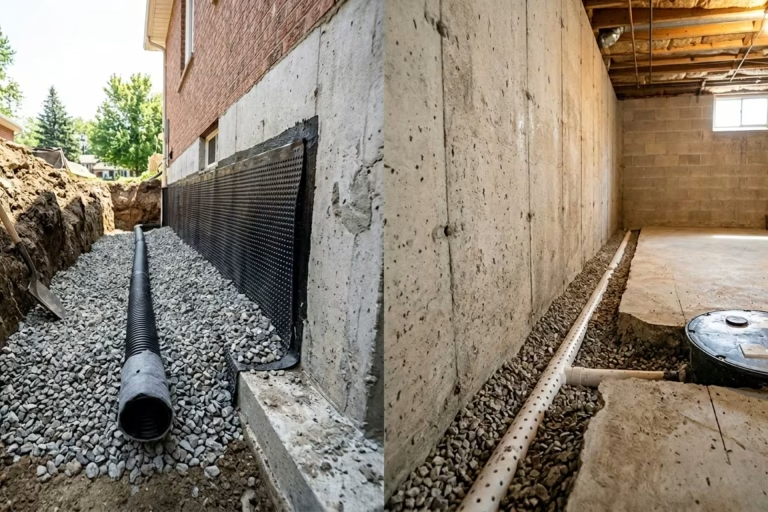
Interior waterproofing is often used when water is entering through the joint where the wall meets the floor or through foundation cracks. A typical interior system may include drainage channels, vapor barriers, crack repairs, and a sump pump. The goal is to collect water safely and move it away from the home before it reaches the finished space.
Interior systems can be efficient because they address water after it enters the foundation area but before it damages the basement. They are especially useful for homes where exterior excavation is difficult because of driveways, patios, steps, decks, or tight lot conditions.
Exterior Basement Waterproofing
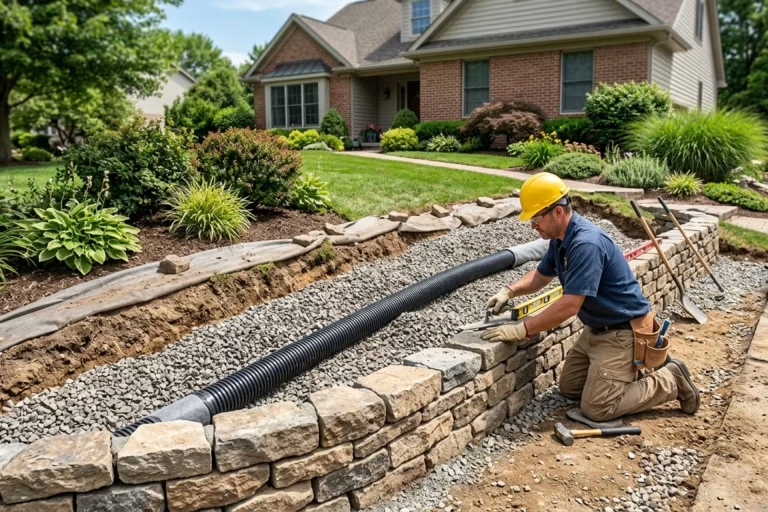
Exterior waterproofing focuses on stopping water before it enters the foundation wall. This may involve excavation, wall cleaning, crack repair, waterproof membranes, drainage board, gravel, and exterior French drains. Exterior solutions can be more involved, but they are often the strongest option when the foundation wall itself is exposed to constant groundwater pressure.
For many properties in New York and Connecticut, the best long-term plan combines exterior grading improvements with interior protection. Optane Masonry and Home Improvements evaluates the property and explains which approach makes sense for the home, the budget, and the condition of the foundation.

Sump Pump Installation and French Drains
A sump pump is one of the most important parts of many basement waterproofing systems. Water is directed to a sump pit and then pumped away from the property. A quality sump pump installation should include proper pit placement, discharge routing, backup planning, and testing.
French drains are also common. An interior French drain collects water along the inside perimeter of the basement. An exterior French drain collects groundwater outside the foundation and redirects it away. Both systems can be effective when installed correctly. The key is choosing the right system for the source of the water.
Why Waterproofing Supports Foundation Health
Basement water and foundation problems are often connected. Repeated moisture can weaken concrete, expand cracks, rot wood framing, and contribute to soil movement around the home. By controlling water, waterproofing helps protect the foundation as well as the living space.
If you are searching for basement waterproofing near me in East Rockaway, Freeport, Flushing, Floral Park, Jackson Heights, or communities throughout Connecticut, Optane Masonry can inspect the problem and recommend a practical solution. Call 914-438-8461 in New York or 203-508-5074 in Connecticut.
Local Service Area Focus
Homeowners searching online usually want a contractor who is close enough to respond quickly and experienced enough to understand local property conditions. Optane Masonry and Home Improvements serves communities throughout New York and Connecticut, including East Rockaway, Freeport, Flushing, Floral Park, Jackson Heights, Queens, Yonkers, Poughkeepsie, Peekskill, Carmel Hamlet, Hamden, Wallingford, Greenwich, Hartford, Waterbury, Danbury, New Haven, and New London. This local coverage helps homeowners find practical help for masonry, waterproofing, roofing, chimney, hardscaping, and foundation needs without dealing with a one-size-fits-all approach.
Each project starts with a clear look at the property, the visible damage, the surrounding drainage, and the long-term goal of the homeowner. That matters because exterior home improvement problems are often connected. A cracked stoop may be related to settlement. A roof leak may be tied to chimney flashing. Basement water may point to foundation cracks or poor grading. By looking at the entire property, Optane Masonry can recommend repairs that make sense, protect the home, and help avoid repeated problems. This approach also gives searchers useful information before they call, which improves trust and helps the right customers choose the right service.