Water pooling beside a home is more than a landscaping inconvenience. Standing water can saturate the soil, increase pressure against foundation walls, enter existing cracks, erode supporting material, and contribute to basement seepage.
The correct solution depends on where the water comes from and why it is not draining away.
Some properties need simple downspout or grading corrections. Others may require catch basins, channel drains, exterior French drains, hardscape adjustments, foundation repairs, or a coordinated waterproofing system.
Optane Masonry and Home Improvements provides exterior drainage, basement repair, foundation, masonry, and waterproofing services throughout New York and New Jersey.
Why Is Water Pooling Around the House?
Standing water forms when rain or melting snow reaches a low area faster than the soil or drainage system can remove it.
Common causes include:
- Negative grading
- Short downspouts
- Overflowing gutters
- Compacted soil
- Clay-rich soil
- Low areas beside the foundation
- Settled patios or walkways
- Driveways sloping toward the home
- Clogged drains
- Broken underground pipes
- Neighboring-property runoff
- Snowmelt
- High groundwater
- Landscape edging that traps water
- Retaining-wall drainage problems
Several conditions may exist at the same property.
What Is Negative Grading?
Positive grading slopes the soil away from the building so surface water moves away from the foundation.
Negative grading slopes toward the home, directing water to the basement walls.
Grading problems may develop when:
- Backfilled soil settles
- Landscaping is changed
- Mulch is repeatedly added
- A patio or walkway sinks
- Erosion removes soil
- New paving changes runoff
- A neighboring property sits higher
- Soil was never graded correctly
A visible depression beside the wall is a common sign.
Adding soil without considering foundation materials, siding clearance, windows, vents, and drainage can create other problems. Grading should move water away without covering vulnerable building components.
How Gutters and Downspouts Affect Foundation Drainage
A roof collects a large amount of water during a storm. Gutters and downspouts must carry that water to a safe location.
Problems occur when:
- Gutters are clogged
- Gutters overflow
- Joints leak
- Downspouts are disconnected
- Extensions are too short
- Underground leaders are blocked
- Water discharges into a low area
- The outlet sends water toward a driveway or walkway
- Roof water flows behind a retaining wall
Dark masonry, washed-out soil, erosion channels, or standing water below a downspout can identify the source.
Extending a downspout may help, but it should not create erosion, ice, or drainage problems elsewhere.
Can Patios and Walkways Cause Foundation Water Problems?
Yes. Hardscaping should direct water away from the property.
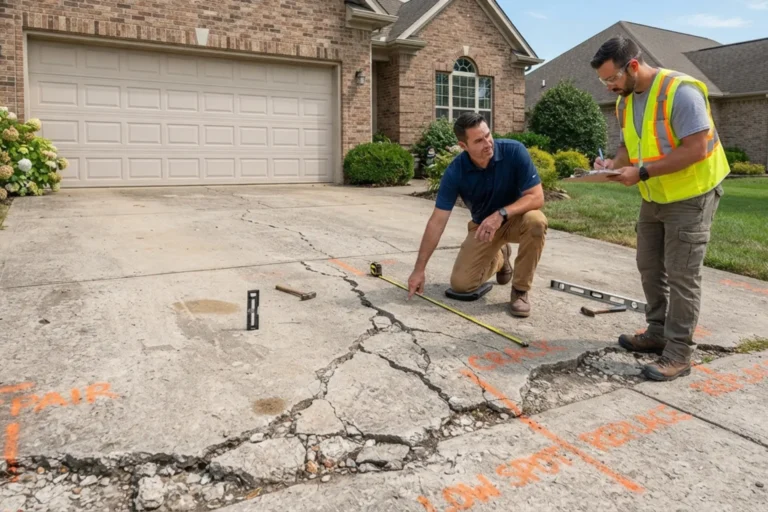
Concrete, pavers, stone, and asphalt can settle over time. Once a surface slopes toward the house, it may channel runoff directly to the foundation.
Warning signs include:
- Water trapped between a patio and wall
- Settled pavers near the house
- Cracks collecting water
- Walkways tilting inward
- Water entering near an exterior door
- Ice repeatedly forming beside the foundation
- Soil washing out beneath paving
Repair may involve resetting pavers, lifting suitable slabs, replacing failed concrete, installing drainage, or rebuilding the affected surface at the correct elevation.
The guide to driveways, patios and walkways explains why hardscape design and drainage should be considered together.
How Soil Type Affects Standing Water
Soils absorb and release water at different rates.
Clay-rich soil
Clay drains slowly and can hold large amounts of water. Saturated clay may create significant pressure against foundation and retaining walls.
Sandy soil
Sandy soil usually drains more quickly but can erode when runoff is concentrated.
Compacted soil
Construction activity, vehicles, foot traffic, or poor landscaping practices can compress soil and reduce its ability to absorb water.
Organic soil
Topsoil and organic material can settle over time and create low areas.
A drainage solution should account for both surface runoff and subsurface soil conditions.
Can Water Pooling Damage a Foundation?
Repeated water exposure can contribute to several problems.
Hydrostatic pressure
Saturated soil places pressure against basement walls. Water may enter through cracks, mortar joints, porous masonry, or the wall-floor joint.
Soil erosion
Moving water can wash away material supporting patios, steps, driveways, retaining walls, and parts of the foundation.
Soil expansion and movement
Some soils expand when wet and shrink as they dry. Repeated changes can place stress on foundation walls and slabs.
Freeze-thaw movement
Wet soil may freeze and expand during winter. This can affect walls, steps, paving, and shallow foundations.
Masonry deterioration
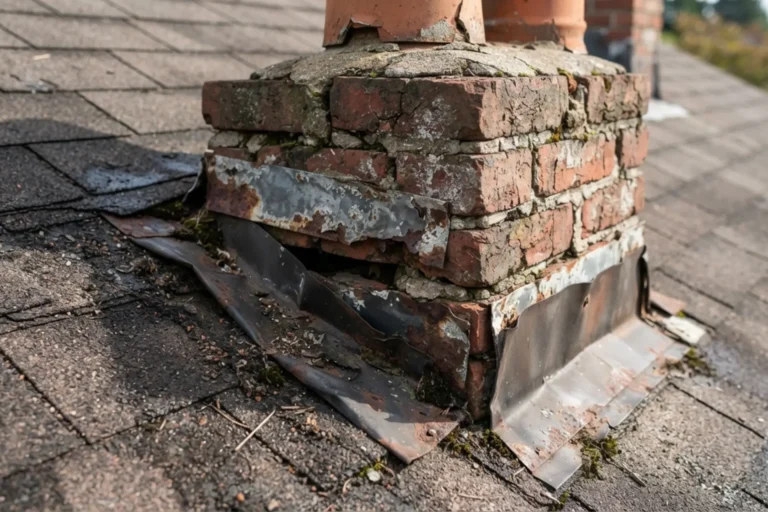
Moisture can enter brick, stone, block, concrete, and mortar. Repeated freezing may contribute to cracking, spalling, and joint failure.
Basement seepage
Water concentrated beside the home can find openings in the foundation and enter the basement.
Signs Water Is Affecting the Foundation
Look for:
- Basement wall stains
- Dampness after rain
- Efflorescence
- Peeling coatings
- Musty odors
- Water at the wall-floor joint
- Foundation cracks
- Crumbling mortar
- Spalling masonry
- Bowing basement walls
- Settled steps
- Soil pulling away from the foundation
- Cracks in nearby paving
- Repeated sump pump activity
Foundation cracking should be evaluated separately from surface drainage. Review the guide to horizontal and vertical foundation cracks for additional warning signs.
How to Fix Water Pooling Near a Foundation
The right solution depends on the source, volume, soil, elevations, and available discharge location.
1. Clean and Repair Gutters
The first step is often checking whether roof water is reaching the ground correctly.
Work may include:
- Removing debris
- Correcting gutter pitch
- Repairing leaking joints
- Replacing damaged sections
- Adding capacity where appropriate
- Correcting roof-edge runoff
- Installing suitable guards
Gutter work will not solve groundwater or negative grading, but it can remove a major source of concentrated water.
2. Extend Downspouts
Downspouts should carry water away from the building to a location where it can continue draining safely.
Extensions should not:
- Empty beside the foundation
- Cross a frequently used walkway
- Discharge onto neighboring land
- Create winter ice
- Cause erosion
- Send water behind a retaining wall
- Connect to a blocked pipe
The proper distance depends on site slope and soil rather than one universal measurement.
3. Improve the Grading
Regrading reshapes the soil so water moves away from the home.
A grading plan should consider:
- Foundation-wall exposure
- Siding clearance
- Basement windows
- Window wells
- Steps and doors
- Neighboring elevations
- Existing trees
- Utilities
- Soil type
- Safe water destination
Water should not simply be transferred from one vulnerable location to another.
4. Install a Swale
A swale is a shallow graded channel that directs surface water across a property.
Swales may be useful when runoff must move around the home or away from a slope. They require adequate grade, erosion protection, and a suitable outlet.
5. Add Catch Basins and Solid Drainpipe
Catch basins collect surface runoff at low points. Solid pipe then carries the water to an approved discharge location.
Unlike perforated French-drain pipe, solid pipe is designed to transport collected surface water without releasing it along the route.
Catch basins may help with:
- Low lawn areas
- Downspout collection
- Patio runoff
- Driveway drainage
- Water near steps
- Concentrated roof discharge
Basins and pipes require maintenance to prevent leaves, sediment, and debris from blocking the system.
6. Install a Channel Drain
Channel drains collect water across a paved surface.
They may be suitable near:
- Garages
- Driveways
- Patios
- Walkways
- Exterior doors
- Pool decks
The drain must be sized, supported, and connected to a suitable outlet. Installing a channel without an effective discharge route will not solve the problem.
7. Install an Exterior French Drain
An exterior French drain collects subsurface water through perforated pipe surrounded by drainage stone and filter material.
It may be used:
- Near a foundation
- Along a slope
- Behind a retaining wall
- At the base of a wet yard
- Near persistent groundwater
- Around vulnerable hardscaping
French drains must have a safe outlet. Depending on the property, they may drain by gravity or connect to a pumping system.
Read the comparison of interior and exterior French drains to understand their different purposes.
8. Correct Settled Hardscaping
A patio, walkway, or driveway that slopes toward the home may require:
- Slab lifting
- Paver resetting
- Joint repair
- Partial replacement
- Complete reconstruction
- A new drainage channel
- Corrected elevations
The surface should direct water away while maintaining safe transitions at doors, steps, sidewalks, and garages.
9. Repair Foundation Cracks
A crack may allow water to enter even after exterior drainage is improved.
Repair methods depend on:
- Crack direction
- Width
- Movement
- Foundation material
- Water pressure
- Accessibility
- Structural condition
Waterproofing a moving crack without stabilizing the underlying problem may lead to failure.
10. Add Interior Drainage When Necessary
Exterior drainage reduces water reaching the foundation, but some basements still experience groundwater below the slab or at the wall-floor joint.
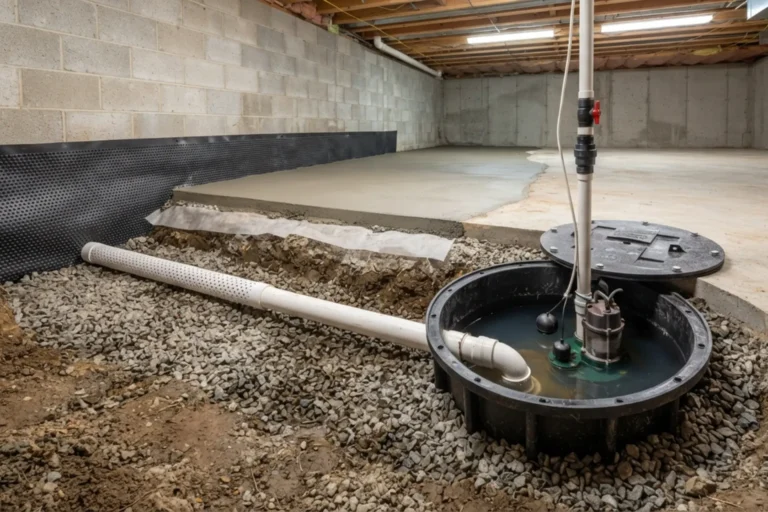
An interior French drain and sump pump may be recommended when water cannot be controlled outside or groundwater continues reaching the basement.
Read Sump Pump vs French Drain to see how collection and pumping systems work together.
French Drain vs Surface Drain
These systems are not interchangeable.
| Feature | French drain | Surface drain |
| Main purpose | Collect subsurface water | Collect visible surface runoff |
| Pipe type | Usually perforated | Usually solid after collection |
| Typical material | Stone and filter fabric | Basin or channel |
| Best for | Saturated soil and groundwater | Low spots and paved surfaces |
| Requires outlet | Yes | Yes |
| May use a pump | Sometimes | Sometimes |
Some properties need both surface and subsurface drainage.
How Much Does Foundation Drainage Cost?
Broad 2026 planning ranges include:
| Drainage improvement | General planning range |
| Basic downspout extension | 100–500+ |
| Localized grading correction | 500–3,000+ |
| Catch basin and drainpipe | 1,000–5,000+ |
| Channel drain | 1,000–5,000+ |
| Exterior French drain | 4,000–15,000+ |
| Major grading and drainage project | 5,000–20,000+ |
| Exterior foundation waterproofing | 8,000–30,000+ |
These are educational estimates, not fixed Optane Masonry prices.
Costs depend on:
- Drain length
- Excavation depth
- Soil conditions
- Access
- Pipe size
- Number of collection points
- Discharge location
- Utilities
- Hardscape removal
- Landscaping restoration
- Foundation repairs
- Required pumping
- Permit requirements
Where Should Drainage Water Go?
Every drainage system needs a lawful and practical discharge location.
Water should not be sent:
- Back toward the foundation
- Onto neighboring property
- Across a public sidewalk
- Into a prohibited sewer connection
- Behind another retaining wall
- Into an area that creates erosion
- Where it will form dangerous ice
- Into a low area with no outlet
Local rules may control stormwater discharge and connections.
What Not to Do About Standing Water
Avoid quick fixes that may worsen the problem:
- Do not cover wet soil with more mulch.
- Do not discharge a pump beside the foundation.
- Do not connect into unknown underground pipes.
- Do not seal basement walls without identifying the source.
- Do not build a raised bed that traps water.
- Do not direct runoff onto neighboring property.
- Do not excavate beside an unstable foundation.
- Do not install a drain without a discharge plan.
- Do not patch structural cracks as cosmetic defects.
- Do not assume every water problem needs the same system.
Water Pooling in New York and New Jersey
Properties across New York and New Jersey experience heavy rain, snowmelt, freezing temperatures, dense development, aging drainage systems, and varied soil conditions.
Urban properties may have restricted side-yard access and extensive paving. Suburban properties may have larger slopes, lawns, patios, retaining walls, and longer drainage routes.
Optane Masonry provides drainage, foundation, waterproofing, masonry, retaining-wall, patio, walkway, and driveway services throughout New York and New Jersey.
The assessment should include the complete path of water—from the roof and surrounding land to the final discharge point.
Request a Foundation Drainage Inspection
Water pooling near the foundation may be caused by gutters, downspouts, grading, soil, settled hardscaping, blocked drains, groundwater, or several connected conditions.
Optane Masonry and Home Improvements provides exterior drainage, French drains, basement waterproofing, foundation repair, masonry restoration, retaining walls, driveways, patios, and walkways across New York and New Jersey.
Request an estimate to have the foundation and surrounding drainage conditions professionally reviewed.