A sump pump and a French drain solve different parts of a basement water problem.
A French drain collects groundwater and redirects it along a controlled path. A sump pump receives collected water in a basin and actively pumps it away from the home. For this reason, many interior basement waterproofing systems use both.
Some properties need only improved exterior drainage. Others need an interior French drain, a sump pump, exterior waterproofing, crack repair, grading improvements, or a combination of methods.
The right system depends on where the water comes from, where it enters, how much water must be managed, and whether gravity can carry it to a safe discharge point.
Optane Masonry and Home Improvements provides professional French drain services, sump pump installation, and basement waterproofing solutions throughout New York and New Jersey.
What Is a French Drain?
A French drain is a drainage system that collects water and redirects it away from an area where it may cause damage.
A typical French drain uses:
- Perforated drainage pipe
- Clean drainage stone
- Filter fabric
- A properly sloped trench
- A suitable discharge or collection point
French drains can be installed inside or outside a building.
Interior French drain
An interior French drain is installed along the basement perimeter, typically beside the footing and below the floor slab.
It collects water entering near:
- The wall-floor joint
- The bottom of a block wall
- The area below the floor slab
- The foundation perimeter
- Locations affected by hydrostatic pressure
The collected water is usually directed to a sump basin.
Exterior French drain
An exterior French drain is installed outside the building. Depending on the system, it may be located near the footing, along a slope, beside a retaining wall, or in another area requiring groundwater control.
Exterior drains can collect water before it reaches the foundation.
They may discharge by gravity when the property provides a suitable lower outlet. When gravity drainage is not available, pumping may be required.
For a detailed comparison, read Interior vs Exterior French Drains: Which Waterproofing System Is Right?.
What Is a Sump Pump?
A sump pump is an electrically powered pump installed in a basin below the basement floor.
Water enters the basin from:
- An interior French drain
- Drainage tile
- Groundwater beneath the slab
- Other approved drainage connections
When the water reaches a predetermined level, a float or sensor activates the pump. The pump sends water through a discharge line to a safe exterior location.
A sump pump removes water; it does not collect water from every part of the basement by itself.
The Main Difference Between a Sump Pump and French Drain
The simplest distinction is:
- A French drain collects and directs water.
- A sump pump lifts and discharges water.
| Feature | French drain | Sump pump |
| Primary function | Collects and redirects water | Pumps collected water away |
| Uses electricity | No | Usually yes |
| Can work by gravity | Yes | No |
| Installed below floor | Interior systems | Sump basin |
| Installed outdoors | Yes | Discharge line exits outdoors |
| Manages perimeter seepage | Yes | Only if connected to collection system |
| Requires maintenance | Yes | Yes |
| May be used alone | Sometimes | Sometimes |
| Commonly used together | Yes | Yes |
A sump pump without an effective collection system may leave water entering elsewhere. A French drain without a suitable outlet has nowhere to send the water.
When Does a Basement Need a French Drain?
A French drain may be recommended when water appears along a broad section of the foundation rather than at one isolated crack.
Common signs include:
- Water at the wall-floor joint
- Several wet areas around the perimeter
- Hydrostatic pressure beneath the floor
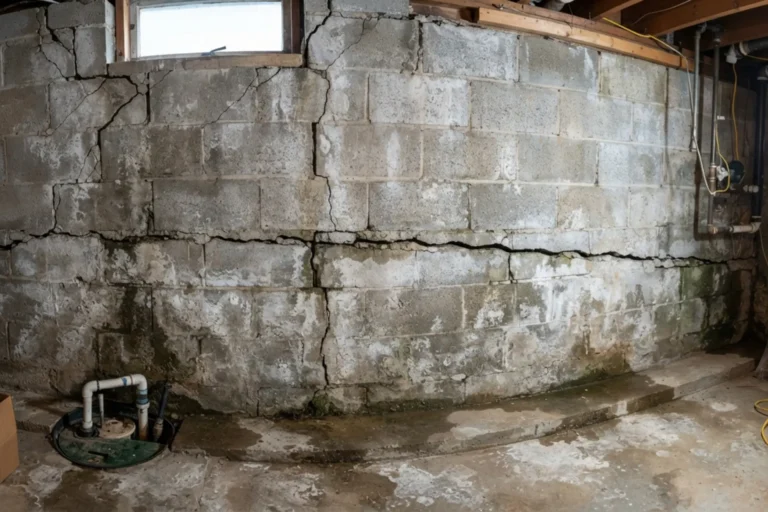
- Water entering through block walls
- Recurring seepage after heavy rain
- Dampness across multiple basement walls
- Standing water near the perimeter
- Mineral deposits along the floor edge
- Moisture returning after crack repairs
An interior French drain can provide a controlled route for water that would otherwise enter the basement unpredictably.
When Does a Basement Need a Sump Pump?
A sump pump may be needed when water must be lifted to reach a safe discharge point.
Common situations include:
- The basement is below the exterior drainage outlet
- An interior French drain collects groundwater
- Water accumulates beneath the floor
- Gravity drainage is not practical
- The water table rises during storms
- An existing basin overflows
- A low basement area repeatedly collects water
- The property has frequent groundwater intrusion
A pump must be sized for the expected water volume and discharge conditions.
When Do You Need Both?
Many wet basements need both a French drain and sump pump.
The system works as follows:
- Groundwater reaches the foundation area.
- The French drain collects it.
- The drain carries it to the sump basin.
- Water rises inside the basin.
- The pump activates.
- The discharge line carries water away from the home.
- The pump stops when the basin reaches a lower level.
This combination is common when gravity cannot move water from the basement to a safe exterior outlet.
Can a Sump Pump Work Without a French Drain?
Yes, in some situations.
A sump pump may collect water entering directly beneath the basin or from limited drainage connections. It may be effective when the water problem is concentrated near that location.
However, a pump cannot pull water through solid concrete or across the full basement perimeter. If water enters at several walls, a collection drain may be needed to direct it to the basin.
Can a French Drain Work Without a Sump Pump?
Yes, if gravity can carry the water to a suitable outlet.
For gravity drainage to work:
- The outlet must be lower than the drain
- The pipe must maintain suitable slope
- The discharge must be lawful and safe
- Water must not return to the foundation
- The outlet must remain open
- The system must avoid creating ice or erosion problems
Many interior basement drains cannot discharge by gravity because the basement floor is below the surrounding grade. In those cases, a sump pump is usually required.
What Problems Can a French Drain Address?
A properly designed French drain may help manage:
- Groundwater around the foundation
- Water at the wall-floor joint
- Hydrostatic pressure beneath the slab
- Recurring perimeter seepage
- Water behind retaining walls
- Saturated soil
- Water collecting on slopes
- Yard drainage problems
A French drain does not repair structural foundation movement, leaking plumbing, sewer backups, roof leaks, or condensation.
What Problems Can a Sump Pump Address?
A sump pump may help remove:
- Water collected by an interior drain
- Groundwater entering a sump basin
- Water beneath a basement slab
- Water collected during heavy rain
- Drainage from certain approved systems
A sump pump does not seal foundation cracks, repair masonry, correct grading, or prevent water from reaching the exterior foundation.
What If Water Enters Through a Foundation Crack?
A localized crack may require direct crack repair rather than a complete perimeter drainage system.
The contractor should assess:
- Crack direction
- Width
- Displacement
- Water entry
- Foundation material
- Whether movement continues
- Exterior drainage
- Soil pressure
- Other cracks nearby
A drain may manage water reaching the basement, but it will not stabilize a structural crack.
Homeowners can review horizontal vs vertical foundation cracks for signs that may require further investigation.
What If Water Comes Over the Top of the Foundation?
Water entering above grade may be caused by:
- Improper grading
- Leaking gutters
- Short downspouts
- Window wells
- Failed flashing
- Cracks around openings
- Siding or masonry defects
- A patio sloping toward the wall
An interior French drain may collect some water after it enters, but exterior correction is often necessary when the source is above the foundation.
Sump Pump Features to Consider
A sump pump system should be selected according to the property’s water conditions.
Important features may include:
Primary pump
The primary pump handles normal drainage. Capacity should match the volume of water and required vertical lift.
Backup pump
A secondary pump can provide additional capacity or activate if the primary pump fails.
Battery backup
A battery system may operate during a power outage. Battery runtime depends on pump activity, battery capacity, condition, and maintenance.
Alarm
A high-water alarm can warn occupants when the basin level rises unexpectedly.
Check valve
A check valve helps prevent discharged water from flowing back into the basin after the pump stops.
Basin cover
A fitted cover can improve safety and reduce debris, odors, and moisture entering the basement.
Discharge system
The discharge line must direct water far enough away to prevent it from cycling back toward the foundation.
French Drain Maintenance
French drains are not completely maintenance-free.
Maintenance may include:
- Inspecting accessible cleanouts
- Keeping exterior outlets clear
- Watching for sediment
- Preventing roots from obstructing the system
- Checking for crushed or damaged pipes
- Maintaining filter and drainage materials
- Confirming water reaches the basin
- Inspecting after major storms
A drain that no longer moves water effectively may be clogged, damaged, improperly sloped, or disconnected.
Sump Pump Maintenance
A sump pump should be inspected and tested regularly.
Homeowners should:
- Pour water into the basin to test activation
- Confirm the pump shuts off
- Inspect the float for obstructions
- Check the power connection
- Test the backup system
- Review alarm operation
- Listen for unusual sounds
- Check the discharge outlet
- Keep the basin free of debris
- Replace batteries according to specifications
Do not wait for severe weather to discover that the pump does not operate.
Where Should Sump Pump Water Be Discharged?
The discharge should move water away from the foundation without creating problems elsewhere.
It should not:
- Empty beside the foundation
- Flow onto a neighboring property
- Create ice on a walkway
- Cause erosion
- Return to the sump system
- Discharge into a prohibited connection
- Create standing water
Local regulations may control where sump water can be discharged.
What Happens During Interior French Drain Installation?
A typical installation may involve:
- Protecting the basement
- Removing a strip of floor around the perimeter
- Excavating beside the footing
- Installing drainage stone and pipe
- Connecting the pipe to a sump basin
- Installing or upgrading the pump
- Restoring the concrete floor
- Testing the collection and discharge system
- Explaining maintenance requirements
Finished walls, utilities, appliances, stairs, and storage can affect access and project scope.
How Much Do French Drains and Sump Pumps Cost?
Broad 2026 planning ranges include:
| System | General planning range |
| New sump pump installation | 1,000–4,000+ |
| Backup pump or battery system | 800–2,500+ |
| Interior French drain | 5,000–15,000+ |
| Exterior French drain | 4,000–15,000+ |
| Complete interior drain and pump system | 6,000–20,000+ |
| Exterior waterproofing and drainage | 8,000–30,000+ |
These are educational estimates, not fixed Optane Masonry prices.
Costs depend on:
- Basement size
- Drain length
- Foundation material
- Floor construction
- Pump capacity
- Discharge length
- Electrical requirements
- Accessibility
- Finished basement demolition
- Exterior excavation
- Landscaping and paving
- Soil and groundwater
- Required foundation repairs
See the complete basement waterproofing cost guide for additional pricing factors.
Sump Pump vs French Drain: Which Is Better?
Neither system is universally better because they serve different purposes.
Choose based on the problem:
| Water problem | Possible solution |
| Perimeter seepage | Interior French drain |
| Water below the slab | Drain and sump pump |
| Groundwater outside foundation | Exterior French drain |
| No gravity outlet | Sump pump |
| Isolated leaking crack | Crack repair |
| Water from poor grading | Exterior grading and drainage |
| Failed exterior membrane | Exterior waterproofing |
| Structural wall movement | Foundation repair and water control |
| Recurring severe groundwater | Combined system |
A professional assessment may show that several solutions should work together.
Basement Drainage in New York and New Jersey
Homes throughout New York and New Jersey experience heavy rainfall, snowmelt, changing groundwater, freeze-thaw cycles, aging foundations, and dense development.
Some properties have enough slope for gravity drainage. Others have basements below exterior grade and require pumping.
Optane Masonry provides basement repair, French drains, sump pumps, foundation repair, masonry restoration, and exterior drainage throughout New York and New Jersey.
Every system should be selected after examining the foundation, basement, gutters, grading, groundwater, existing drainage, and safe discharge options.
Request a Basement Drainage Inspection
A French drain collects water. A sump pump removes collected water when gravity is not available. Many basements need both, while others require a different repair entirely.
Optane Masonry and Home Improvements provides interior and exterior French drains, sump pump installation, basement waterproofing, foundation crack repair, masonry restoration, and drainage improvements across New York and New Jersey.
Request an estimate for recommendations based on the actual source and movement of water around your property.