
Optane Masonry & Home Improvements provides professional stairs and steps services from our Elizabeth, NJ base, serving homeowners throughout North Jersey and selected New York areas.
Optane Masonry & Home Improvements is based in Elizabeth, NJ and provides stairs, steps, and stoop repair services throughout Elizabeth and surrounding North Jersey communities.
Exterior entry steps are exposed to regular foot traffic, rain, runoff, temperature changes, and long-term weathering. Brick joints can deteriorate, concrete edges may crack, stone can loosen, and stair sections can move if the supporting area settles.
From our Elizabeth base, service may be available in Union, Linden, Hillside, Roselle, Roselle Park, Cranford, Rahway, Springfield, Newark, and other selected North Jersey locations.
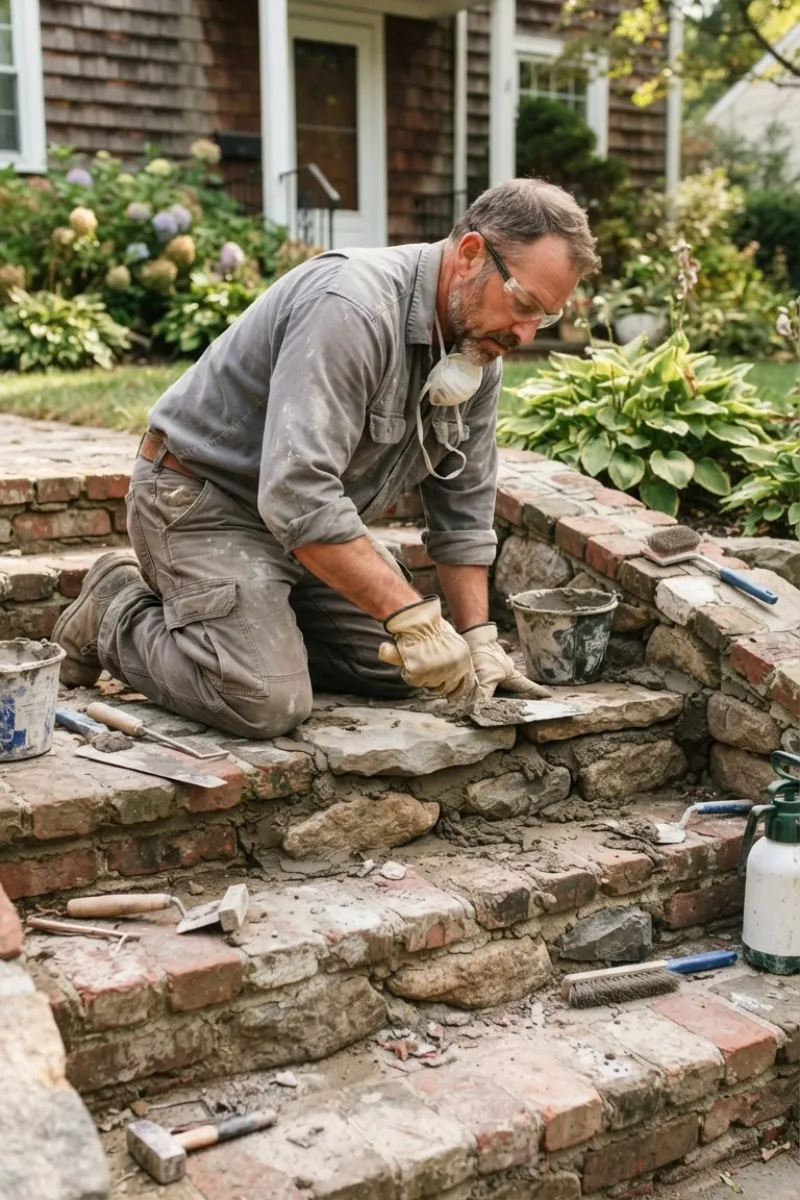
Brick steps may develop loose units, cracked mortar, damaged edges, spalling, or movement between tread and riser sections.
Concrete steps can crack, chip, spall, settle, or separate from adjoining landings and walkways.
Stone steps can become loose, uneven, cracked, or displaced as joints deteriorate or the supporting base moves.
Front stoops and entry steps often combine masonry, concrete, brick, stone, or pavers around the main entrance.
Where deterioration is concentrated in one area, it may be possible to rebuild only the affected section instead of replacing the entire stair assembly.
Exterior stairs and steps combine structural support, walking surfaces, masonry materials, and transitions between different elevations. Problems can develop in the tread, riser, sidewall, landing, stoop, or supporting base. The right repair method depends on what has failed and whether the issue is limited to individual masonry units or connected to settlement, drainage, or deterioration beneath the visible surface.
Step damage can have several causes, and similar-looking problems may require different repairs. Loose masonry may be limited to failed joints, while uneven step heights or wider cracking can indicate movement beneath the structure.
Cracks may appear across concrete, brick, stone, mortar joints, or between different sections of the stair or stoop.
Settlement, moisture, temperature movement, aging materials, impact, or movement beneath the steps may contribute.
The cracked area should be evaluated to determine whether repair, joint restoration, partial rebuilding, or replacement is appropriate.
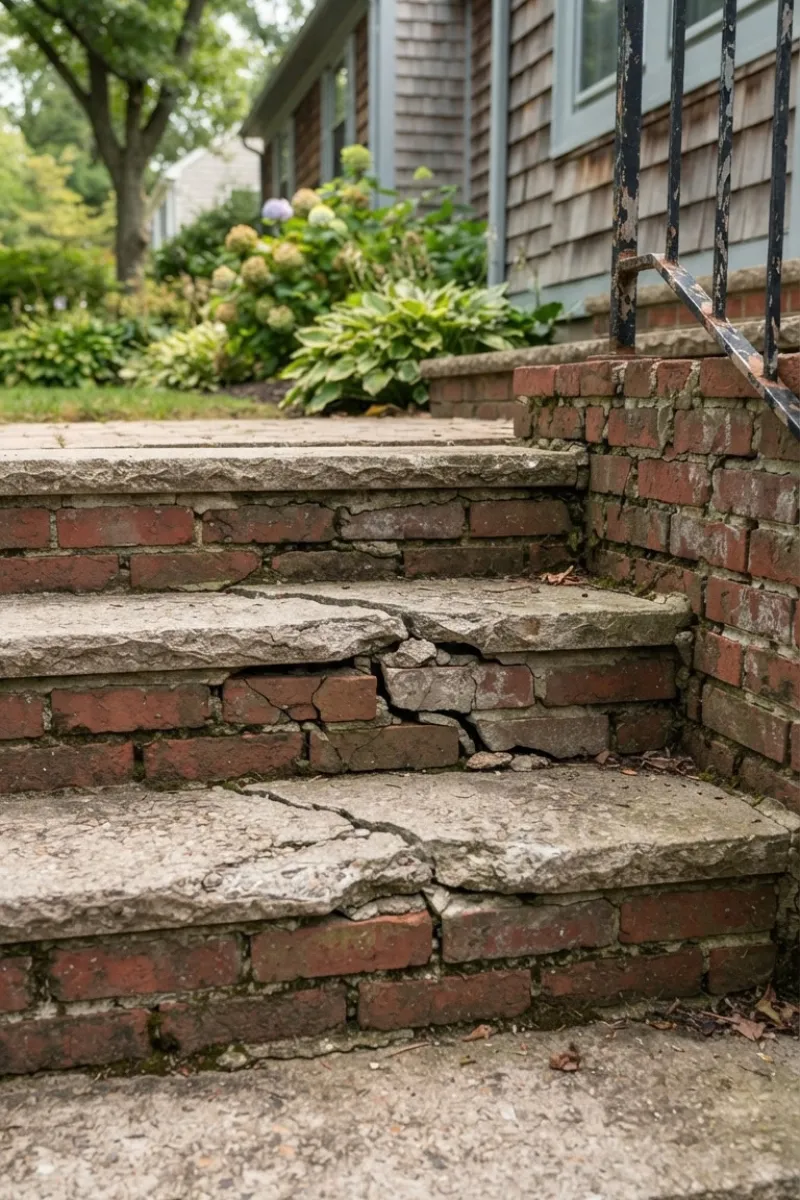
Individual bricks or stones may move underfoot, loosen from the surrounding mortar, or become unstable along edges and corners.
Mortar deterioration, water entry, impact, settlement, freeze-thaw exposure, or movement in the supporting structure may contribute.
Loose units may be reset or replaced after the surrounding joints and supporting conditions are checked.
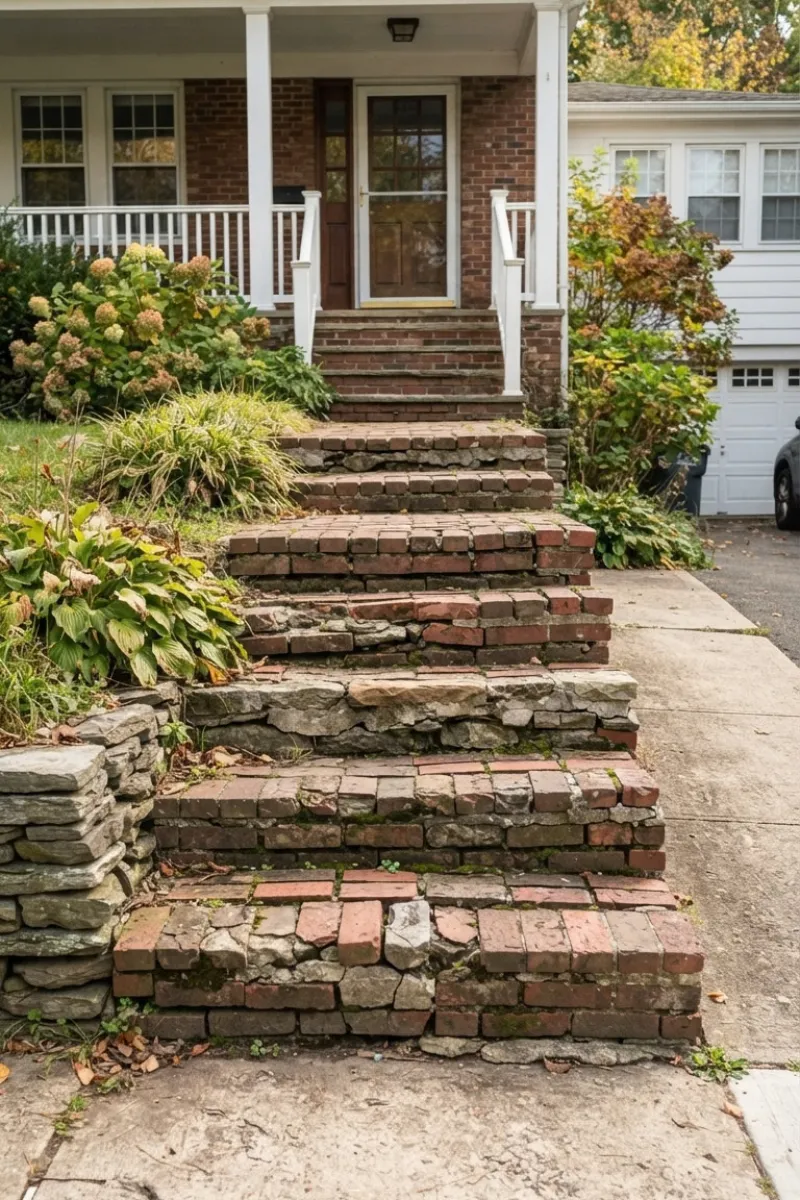
One or more treads may sit higher or lower than adjoining steps, creating noticeable changes in the normal stair pattern.
Settlement, base movement, displaced masonry, previous repairs, or deterioration beneath the stair assembly may contribute.
The affected section should be assessed before resetting, rebuilding, or reconstructing the steps to restore alignment.
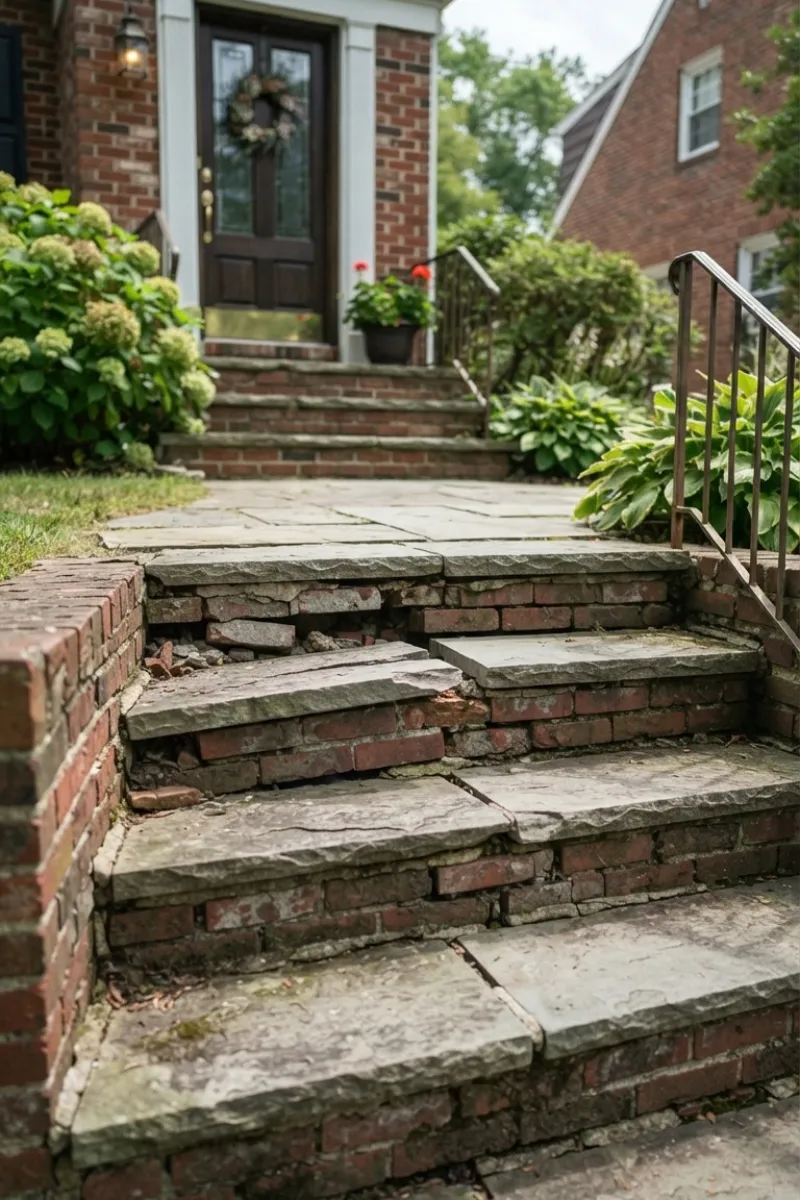
Mortar around brick or stone steps may become recessed, powdery, cracked, or partially missing between masonry units.
Weather exposure, moisture, aging mortar, freeze-thaw cycles, or unsuitable previous repairs may contribute.
Stable masonry may be repointed after deteriorated mortar is removed and the surrounding units are checked.
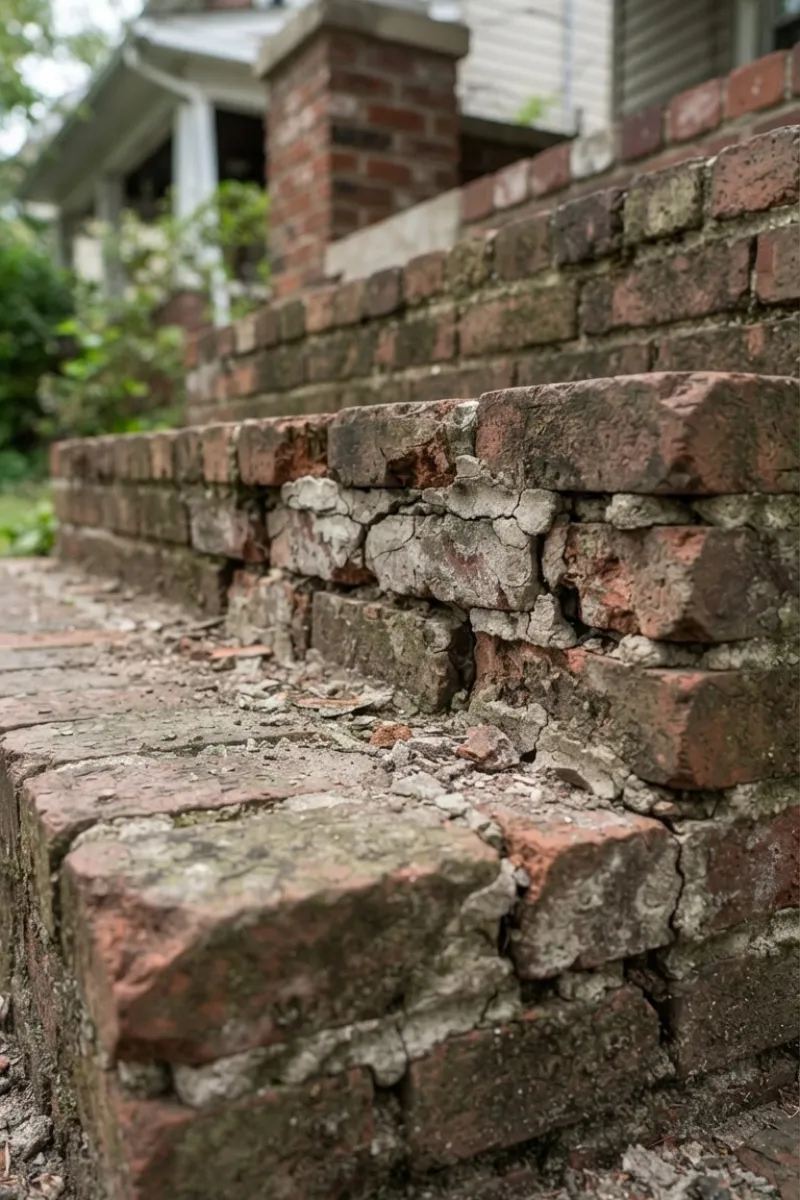
Step nosings, corners, or outer edges may chip, crack, or break away, leaving damaged areas along walking surfaces.
Impact, weathering, repeated loading, moisture, aging concrete or masonry, or insufficient edge support may contribute.
Localized repair or material replacement may be possible depending on the depth and extent of the damage.
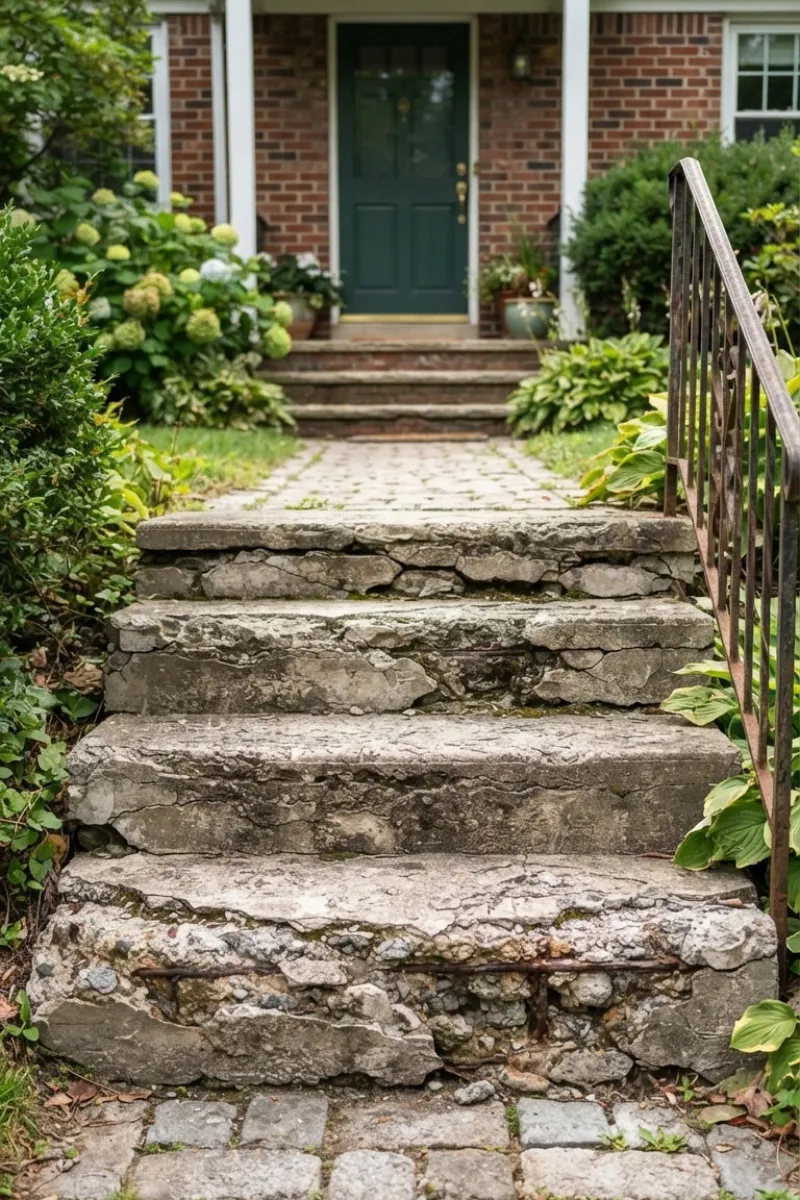
Rainwater may collect at the base, landing, or sides of the steps instead of draining away from the entry area.
Low spots, settlement, surrounding grading, blocked drainage paths, or changes in adjoining hardscape may contribute.
Drainage and surface levels should be evaluated together before repairing surrounding masonry or rebuilding affected areas.
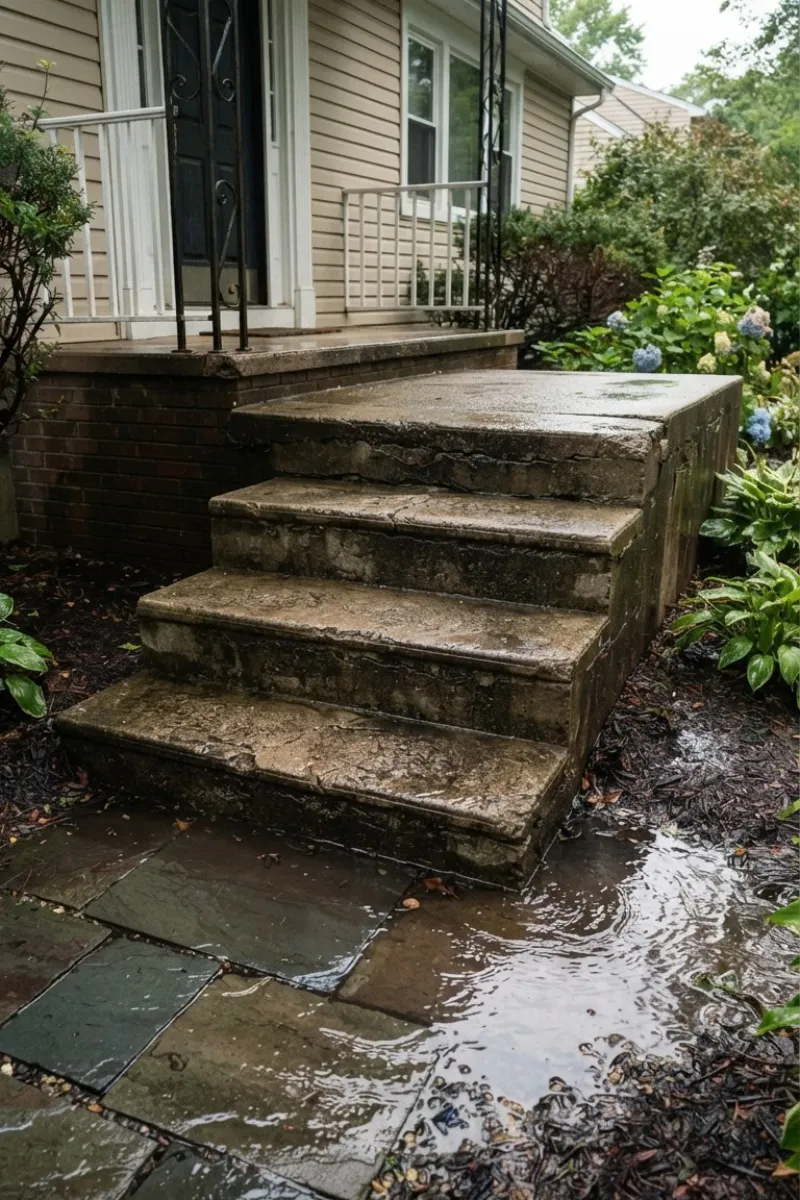
Exterior steps experience repeated foot traffic while also being exposed to moisture, changing temperatures, settlement, and normal material aging.
Steps depend on stable support beneath the stair assembly. If the supporting material settles unevenly, the structure may crack, tilt, separate, or develop inconsistent step heights.
Water entering open joints or collecting around the base of steps can contribute to mortar deterioration, masonry wear, and movement beneath the surface.
Moisture is especially relevant where cracks or failed joints allow repeated water entry.
Moisture absorbed by brick, concrete, stone, or mortar can freeze and expand. Repeated freeze-thaw cycles may worsen already weakened materials and open existing cracks further.
Mortar joints can become recessed, brick may spall, concrete can crack or chip, and stone may loosen as exterior materials age.
Not every aging step assembly requires complete rebuilding, but the extent of deterioration should be evaluated.
Stairs receive concentrated loading at tread edges and entry points. Already weakened corners, nosings, joints, or loose units may deteriorate more quickly with continued use.
Surface patching over loose material, shallow mortar repair, or resetting individual units without addressing movement beneath them can lead to recurring damage.
Repair methods depend on the stair material, location of the damage, degree of movement, condition beneath the surface, and whether the problem is isolated or widespread.
Where brick or stone steps remain stable but mortar joints have deteriorated, damaged mortar can be removed and replaced.
Repointing is most suitable where the masonry units remain serviceable and movement is not the main issue.
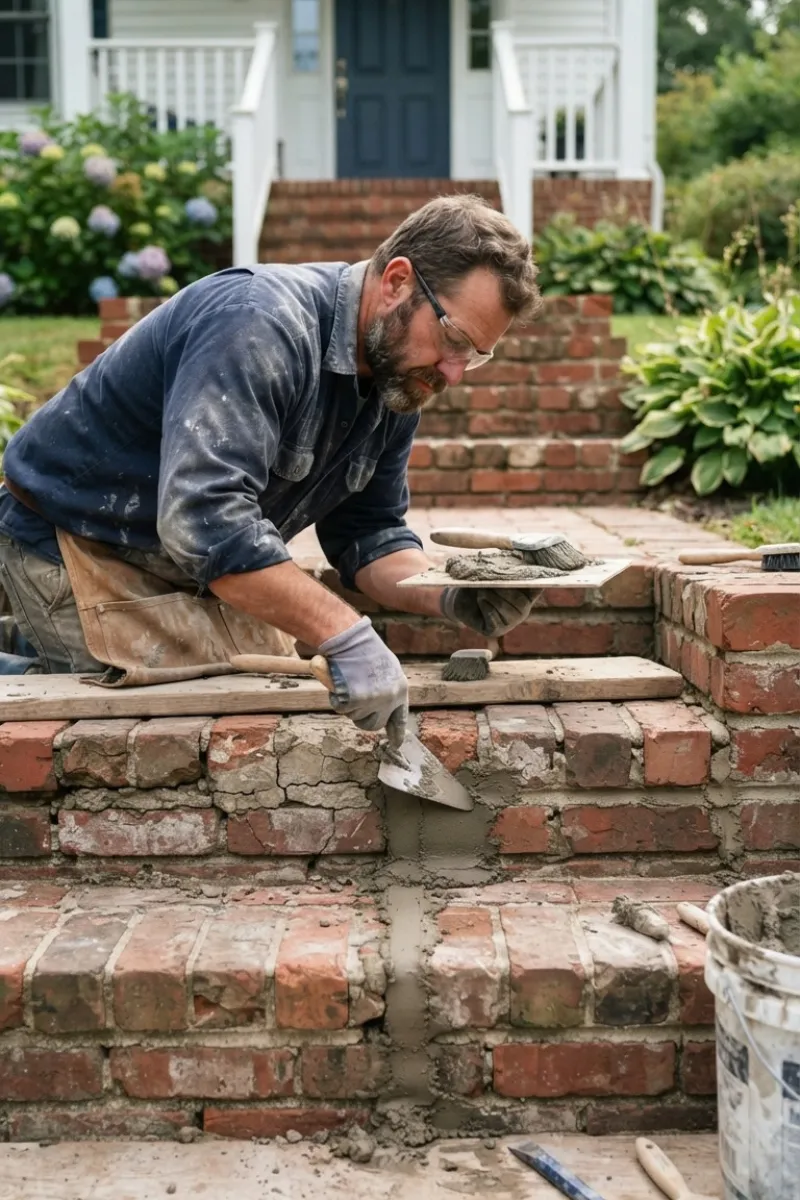
Individual cracked, loose, or deteriorated masonry units may be removed and replaced while keeping surrounding serviceable material in place.
The adjoining joints and underlying support should also be checked.
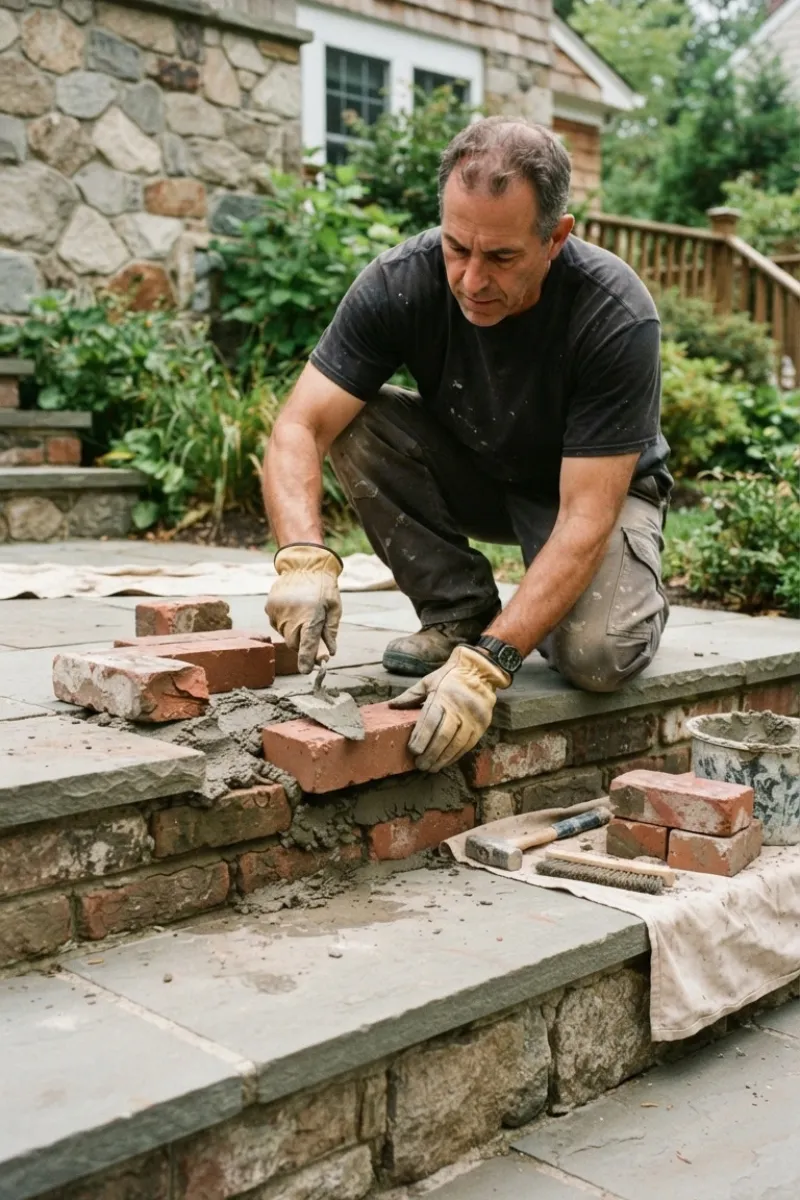
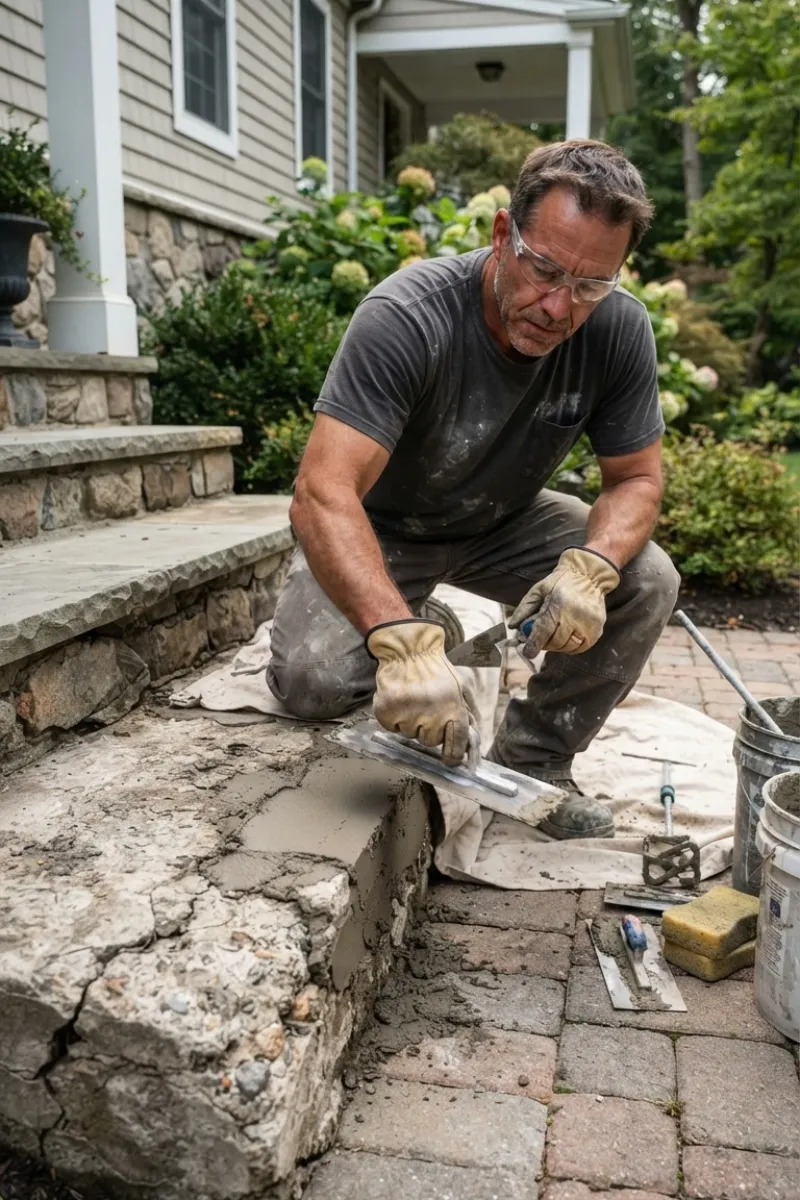
Localized chips, surface deterioration, or smaller damaged areas may sometimes be repaired depending on the condition of the concrete.
Sections showing significant cracking, settlement, or movement may require more extensive work.
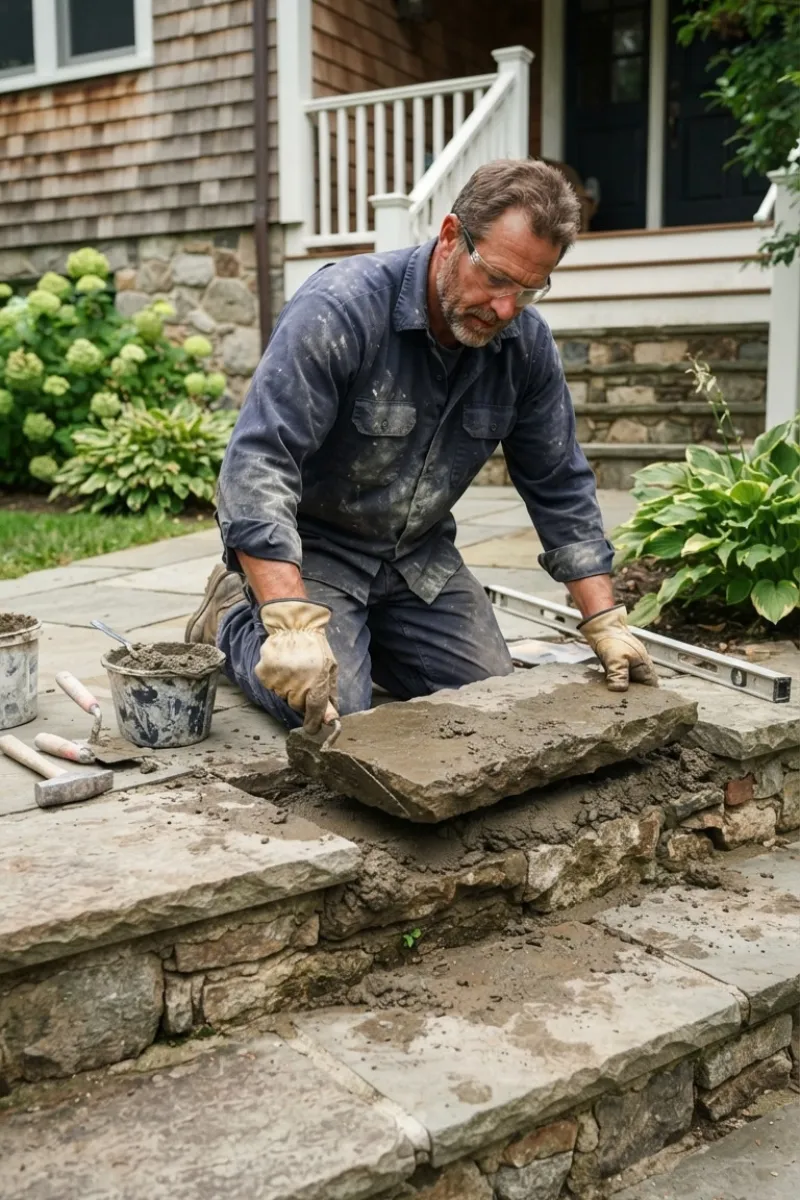
Loose stones, pavers, or masonry units may be lifted and reset where the supporting area can be corrected and the material remains usable.
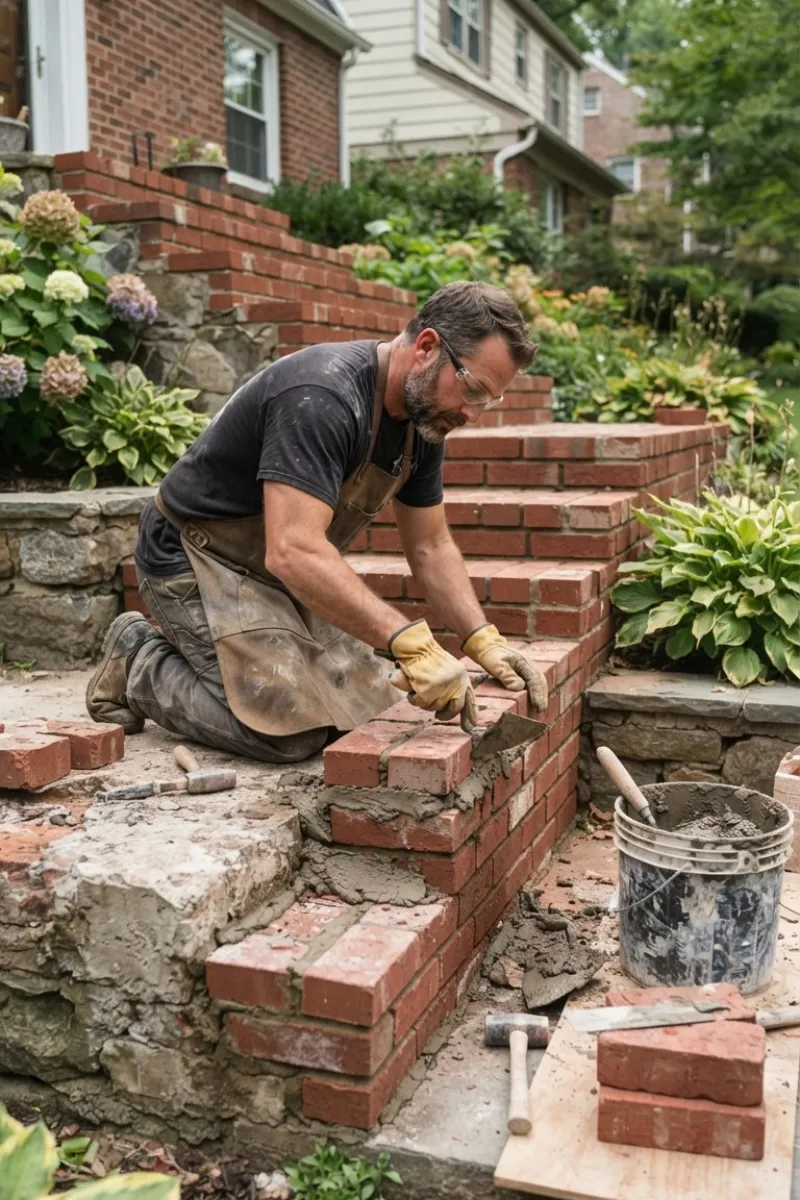
When multiple parts of the stair assembly have deteriorated or moved, rebuilding may be more appropriate than continued localized repair.
This can range from reconstructing one tread or side section to rebuilding the complete entry stair system.
Not every damaged stair or stoop needs full replacement.
A minor repair may be enough where the issue is limited to loose mortar, a damaged masonry unit, or a small concrete defect.
Restoration may involve repointing joints, resetting brick or stone, replacing isolated materials, and retaining most of the existing step assembly.
A partial rebuild may be appropriate where one tread, riser, sidewall, landing section, or corner has failed more significantly than the rest.
More extensive replacement or reconstruction may be necessary when the stairs have widespread cracking, significant settlement, inconsistent step heights, unstable sections, or deterioration throughout the supporting structure.
The decision should consider tread and riser alignment, masonry condition, concrete condition, support beneath the steps, drainage, previous repairs, and whether the existing structure remains safe and serviceable.
The appropriate solution should be based on the actual condition rather than automatically recommending the most extensive option.
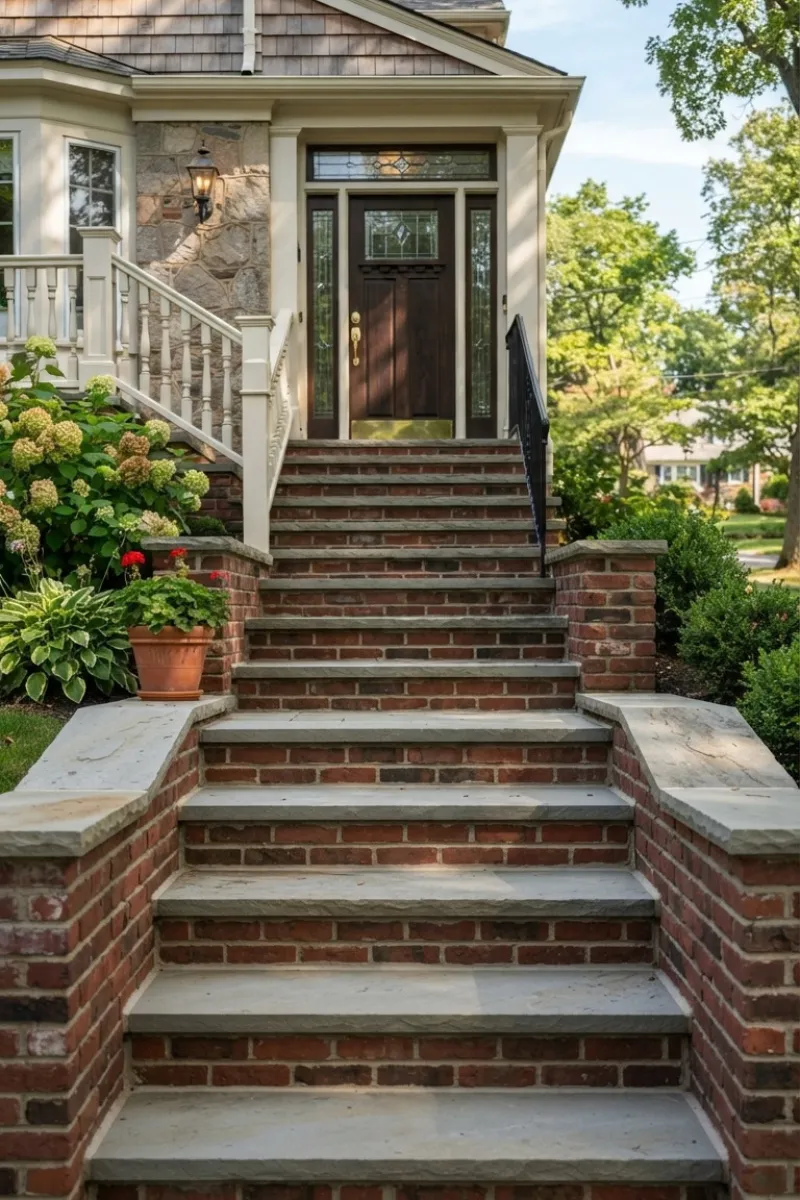
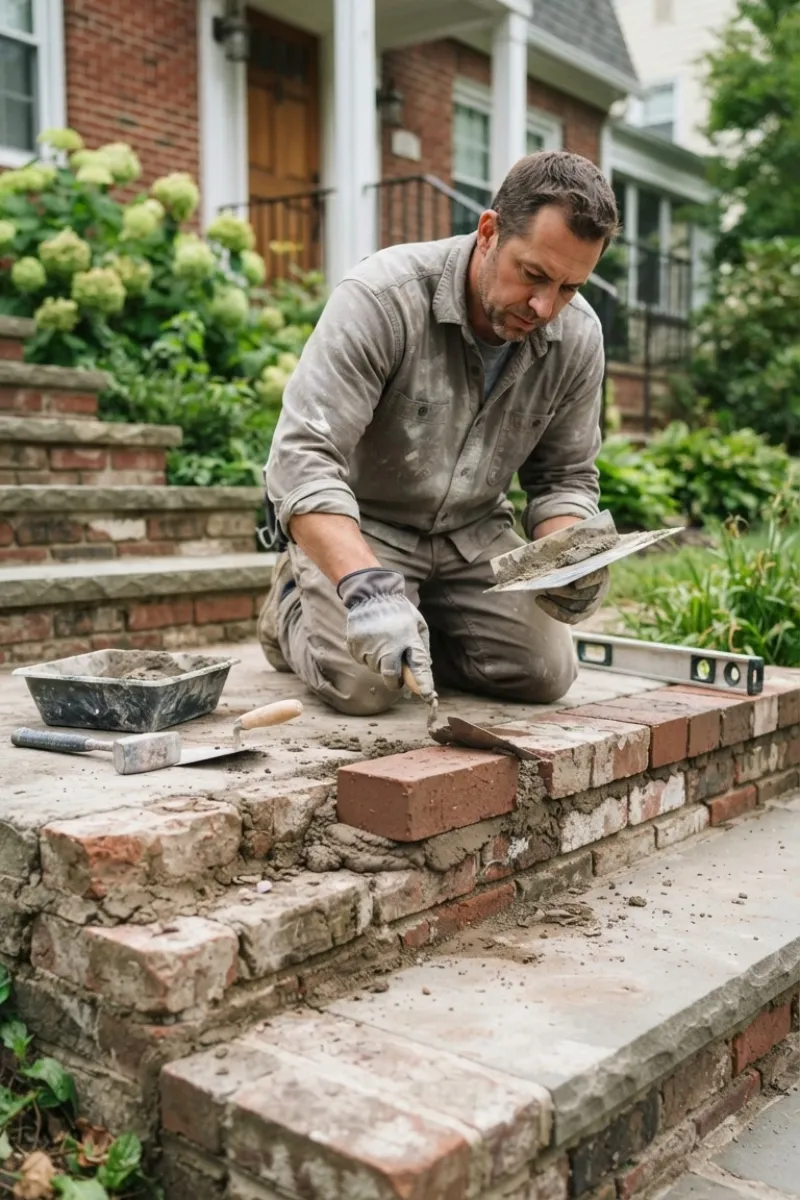
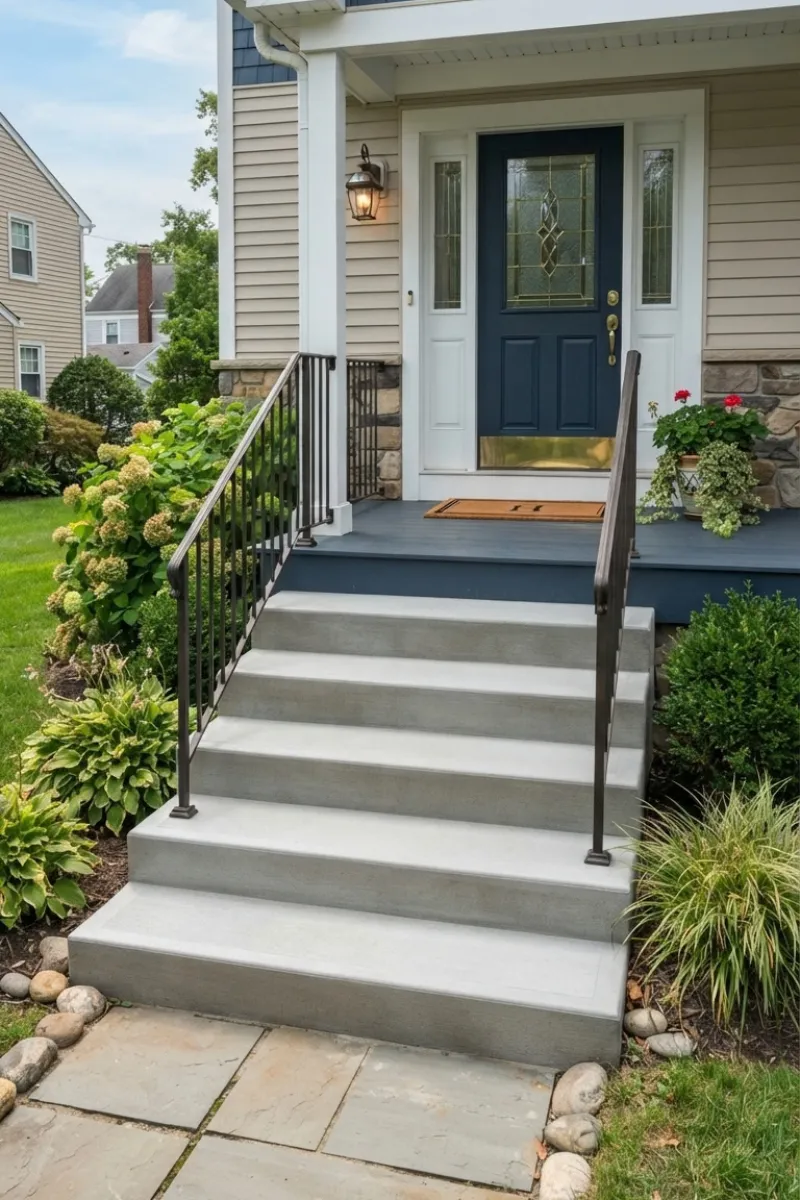
We review treads, risers, joints, masonry units, concrete surfaces, landings, edges, visible movement, and surrounding conditions.
The condition is considered in relation to settlement, moisture, aging materials, joint deterioration, impact, or movement beneath the stair assembly.
The proposed work may involve repointing, individual masonry repair, concrete repair, resetting, partial rebuilding, or full reconstruction.
The agreed work is completed according to the stair material, affected area, and scope of repair.
The finished stairs and adjoining areas are reviewed against the intended repair or rebuilding scope.
Optane is based in Elizabeth, making North Jersey the primary service area. Masonry and hardscape services are available across nearby communities, with selected New York coverage provided as an additional service region.
Serving New Jersey property owners with reliable masonry, foundation, drainage, roofing, and exterior improvement solutions.
Providing masonry, foundation, drainage, roofing, and home improvement services across communities throughout New York.
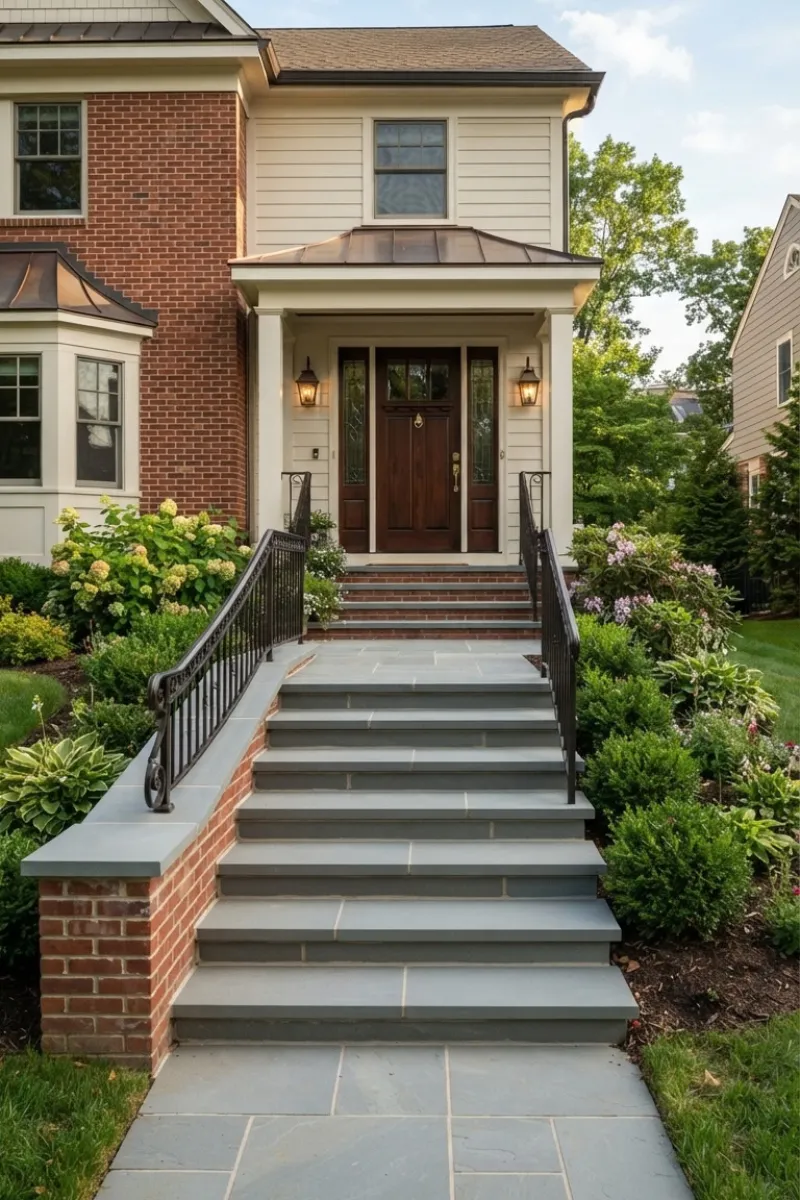
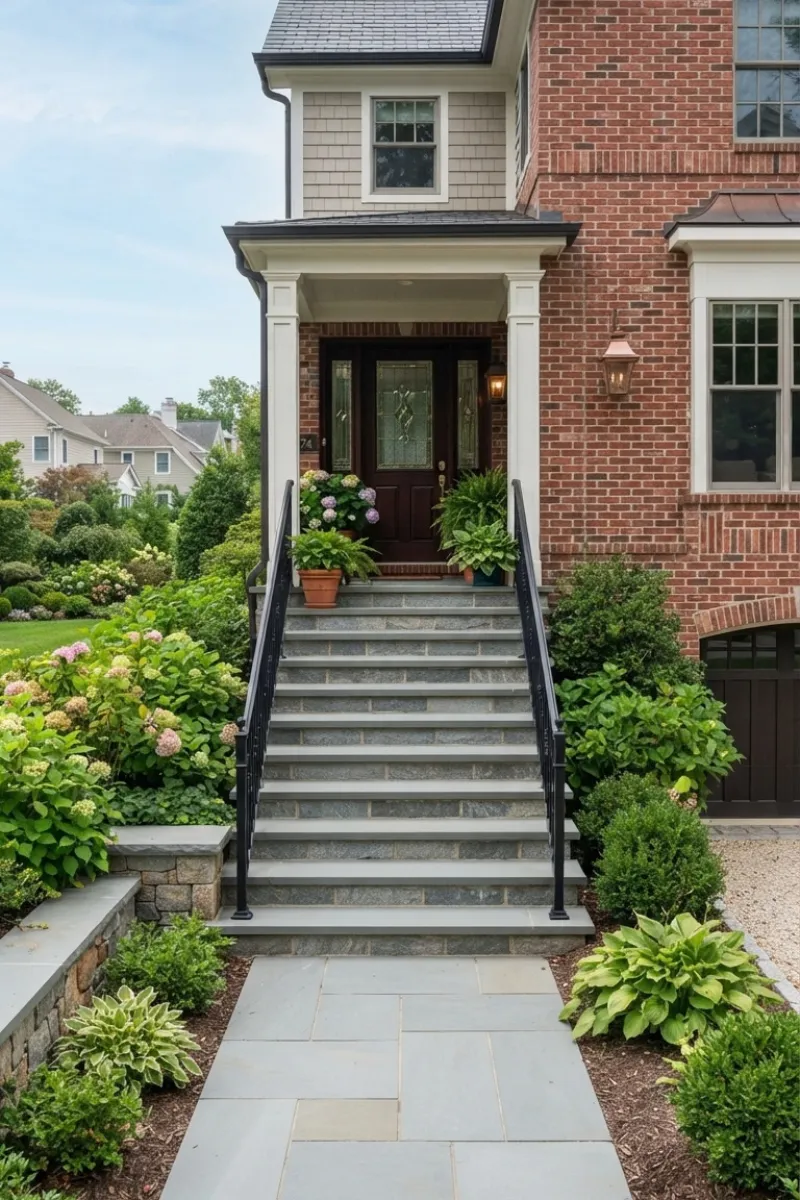
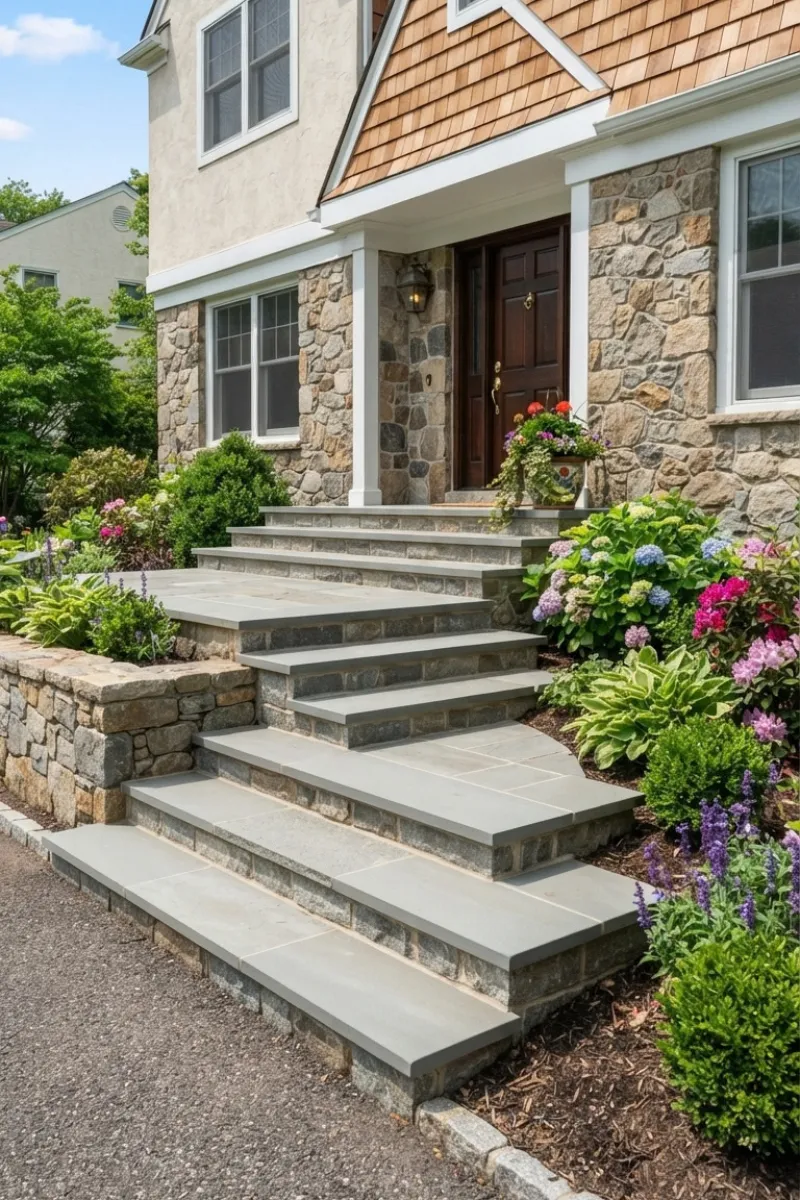
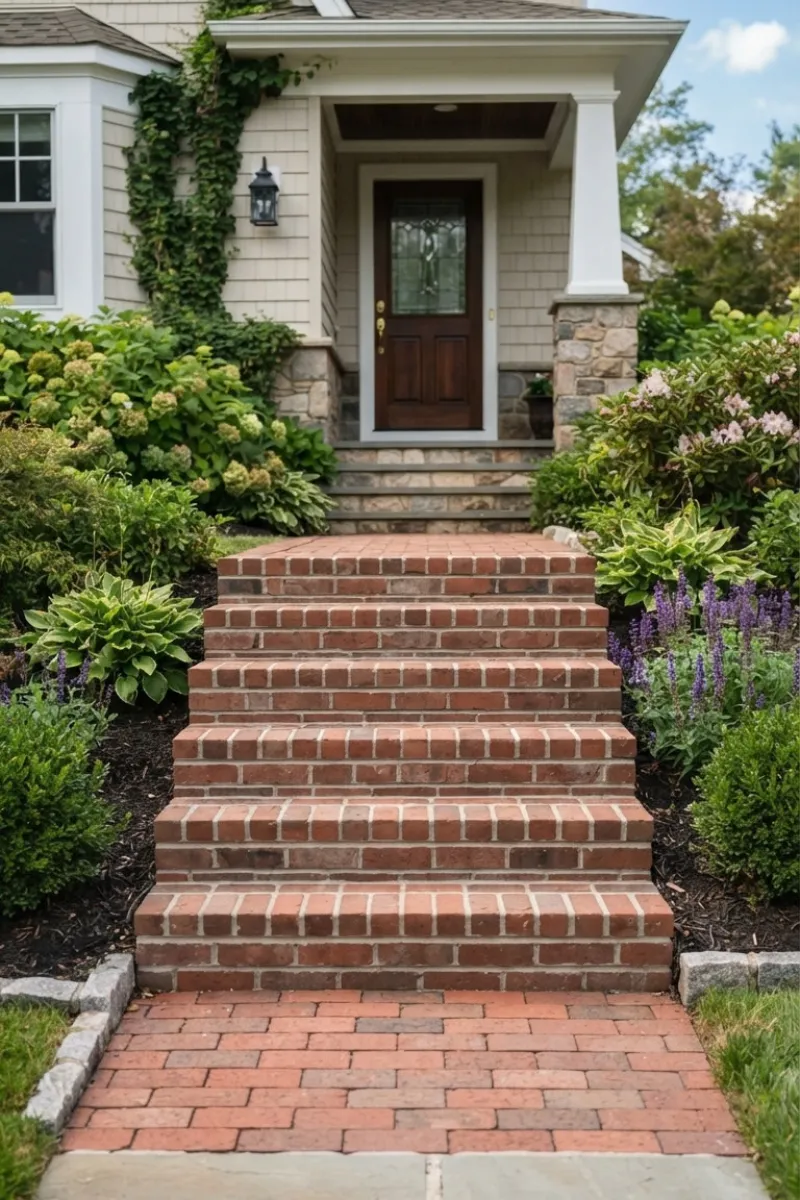
Property owners can review actual Optane work before discussing their own masonry or exterior improvement project.
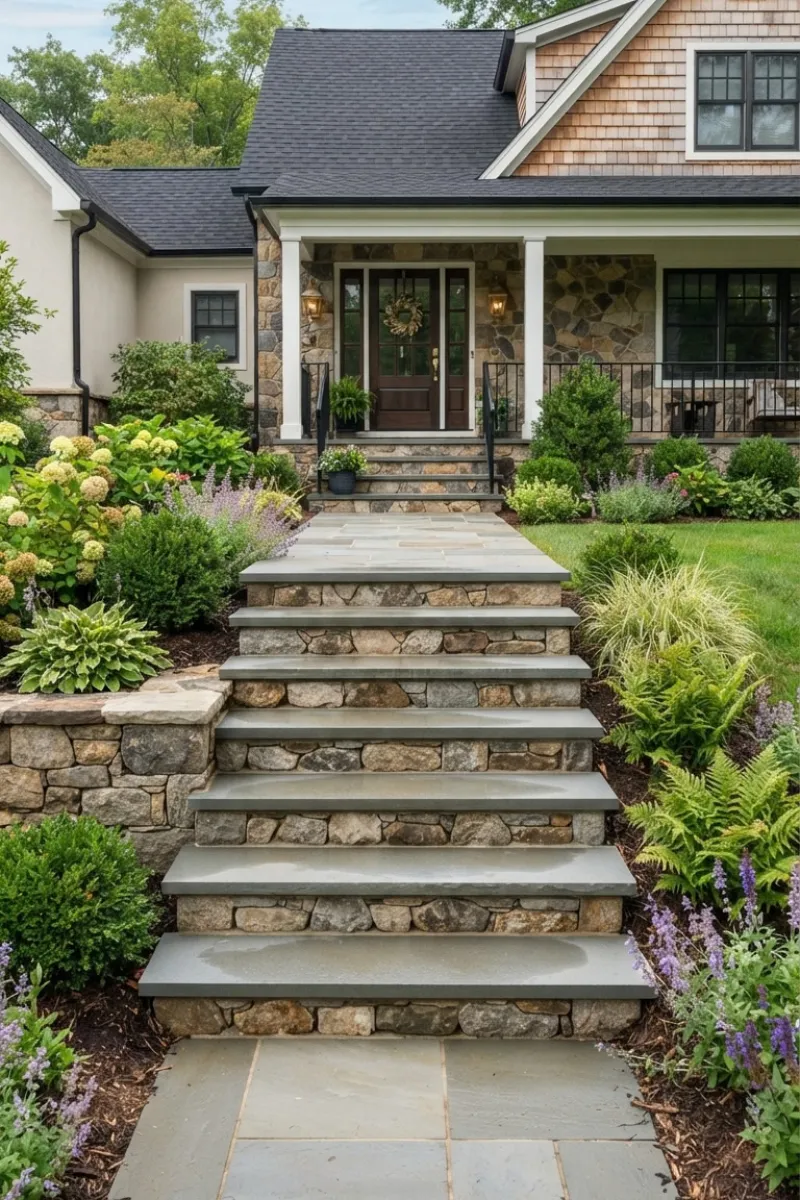
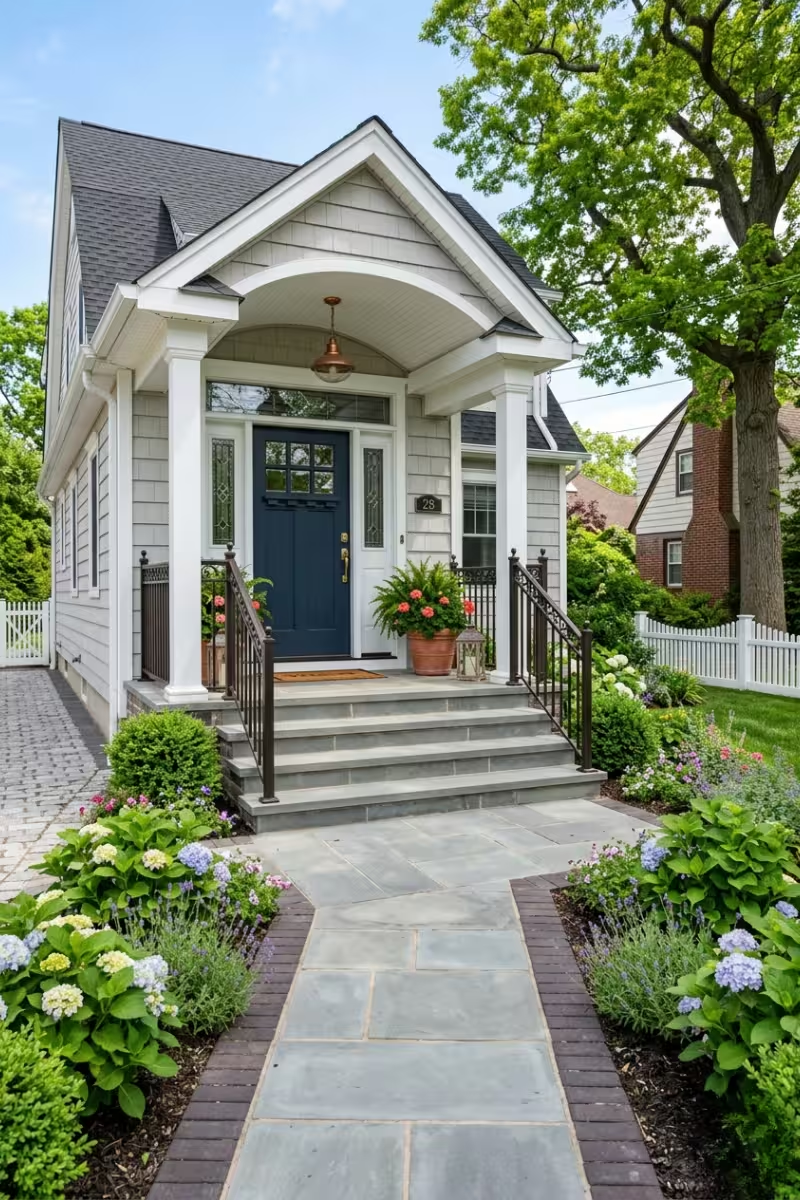
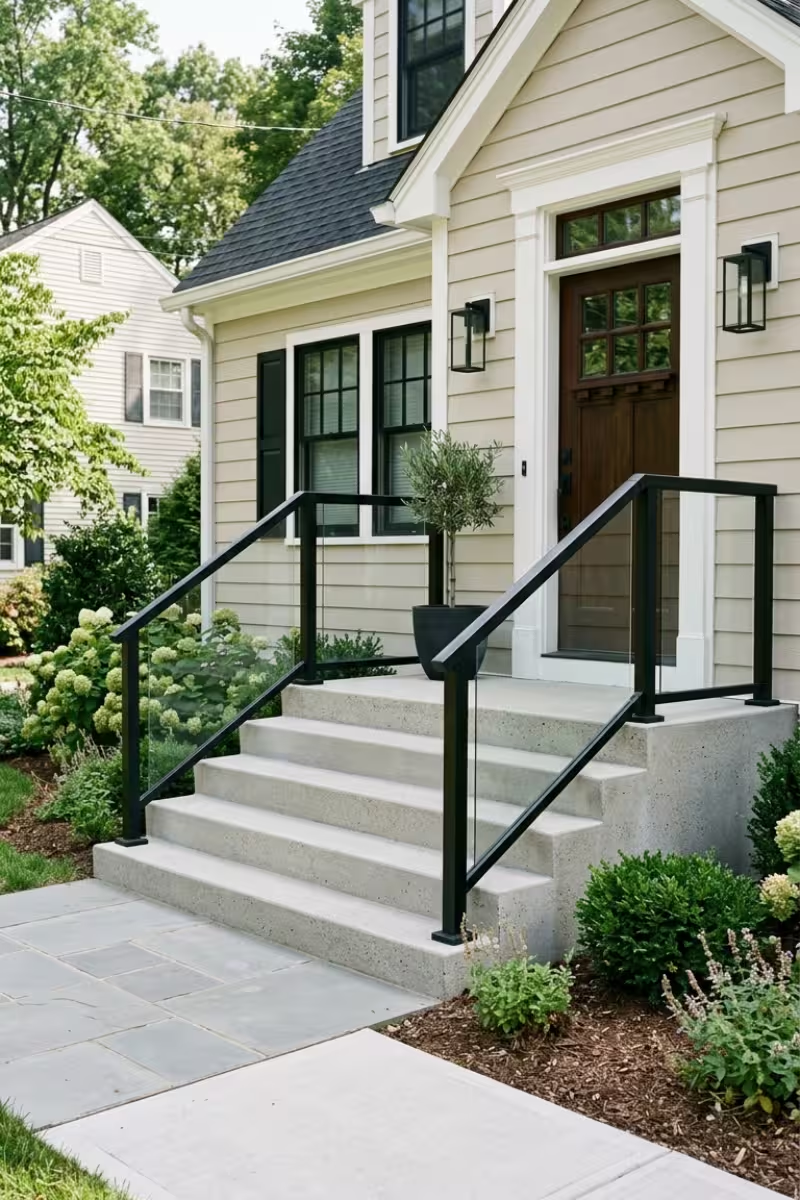
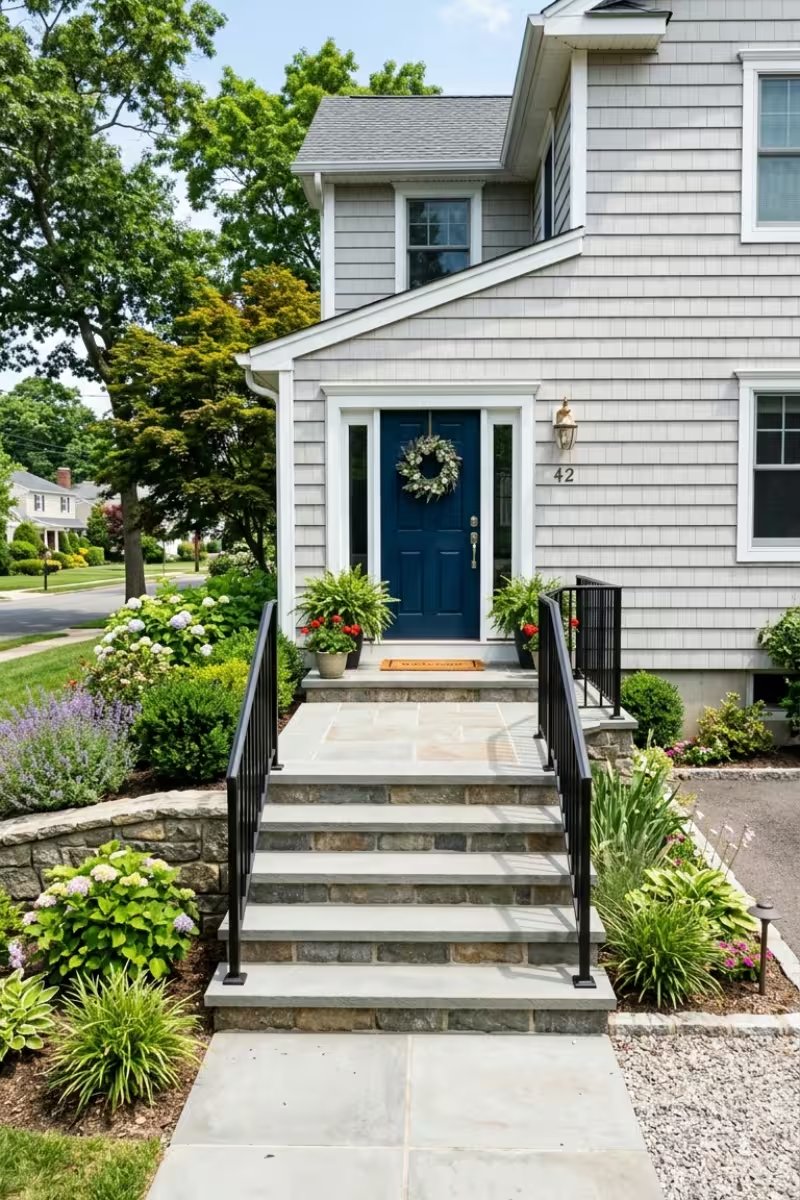
Before choosing a contractor, property owners can review genuine customer feedback published by Optane.
Optane is based in Elizabeth and primarily serves properties throughout North Jersey.
Stairs and steps work may involve brick, stone, concrete, pavers, or other masonry materials.
Depending on the condition, work may involve localized repair, repointing, resetting, partial rebuilding, or more extensive reconstruction.
Visible stair damage is considered together with settlement, drainage, support, and adjoining masonry before work is recommended.
Steps that involve damaged brick, mortar, concrete, or surrounding hardscape can be considered alongside related exterior services.
HIC License: HIC.0703840
Optane Masonry & Home Improvements provides a range of exterior, structural, drainage, waterproofing, and home improvement services.
Loose masonry, cracked concrete, deteriorated joints, uneven treads, settlement, and damaged edges can require different repair approaches depending on the stair construction and underlying condition. Optane Masonry & Home Improvements provides stairs, steps, and stoop repair and rebuilding services from its Elizabeth, NJ base throughout North Jersey and selected New York areas.
Common signs include loose brick or stone, cracked concrete, deteriorated mortar, broken edges, uneven tread heights, movement, or sections separating from the landing. The condition beneath the steps should also be considered if settlement or repeated movement is visible.
Often, yes. If the supporting structure remains stable and only individual bricks or joints have failed, localized repair or repointing may be appropriate. More extensive rebuilding may be needed where multiple units have shifted or the step assembly has moved.
Settlement beneath the steps, base movement, water-related erosion, or changes around the supporting area can cause stair sections to move. The extent and location of movement should be evaluated before deciding whether resetting, partial rebuilding, or reconstruction is appropriate.
Some smaller cracks and localized surface damage may be repairable. Where cracks are associated with significant settlement, movement, or widespread deterioration, partial or full replacement may be more practical. The surrounding condition and support beneath the steps should be evaluated first.
Yes. Optane Masonry & Home Improvements is based in Elizabeth, NJ, with North Jersey serving as the primary service region. Stairs, steps, and stoop services may be available throughout Elizabeth and nearby communities including Union, Linden, Hillside, Roselle, Cranford, Rahway, Newark, and other selected areas.
Optane also provides selected New York coverage in addition to its North Jersey market. Staten Island is part of the current retained New York service area. Property owners can contact the New York number to discuss their steps or stoop and service availability.
914-438-8461
201-982-2375